Hormone therapy · Women and men · Peoria, AZ

Hormone Replacement Therapy (HRT) in Peoria, AZ for Women and Men

Hormone replacement therapy (HRT) gives back some of the hormones your body makes less of with age: estrogen and progesterone for women in perimenopause and menopause, and testosterone for men with confirmed low testosterone. At AZ Vitality and Wellness in Peoria, our nurse practitioners start with your symptoms and labs drawn right here, then prescribe and monitor a plan built around you.

Your first step is a $250 hormone consultation. Join our Hormone Optimization Membership the same day and $100 of it comes back as a credit. Membership is $179 a month and covers your follow-up visits and lab panels.

Booking online? Choose “HRT for WOMEN” or “HRT for MEN.”

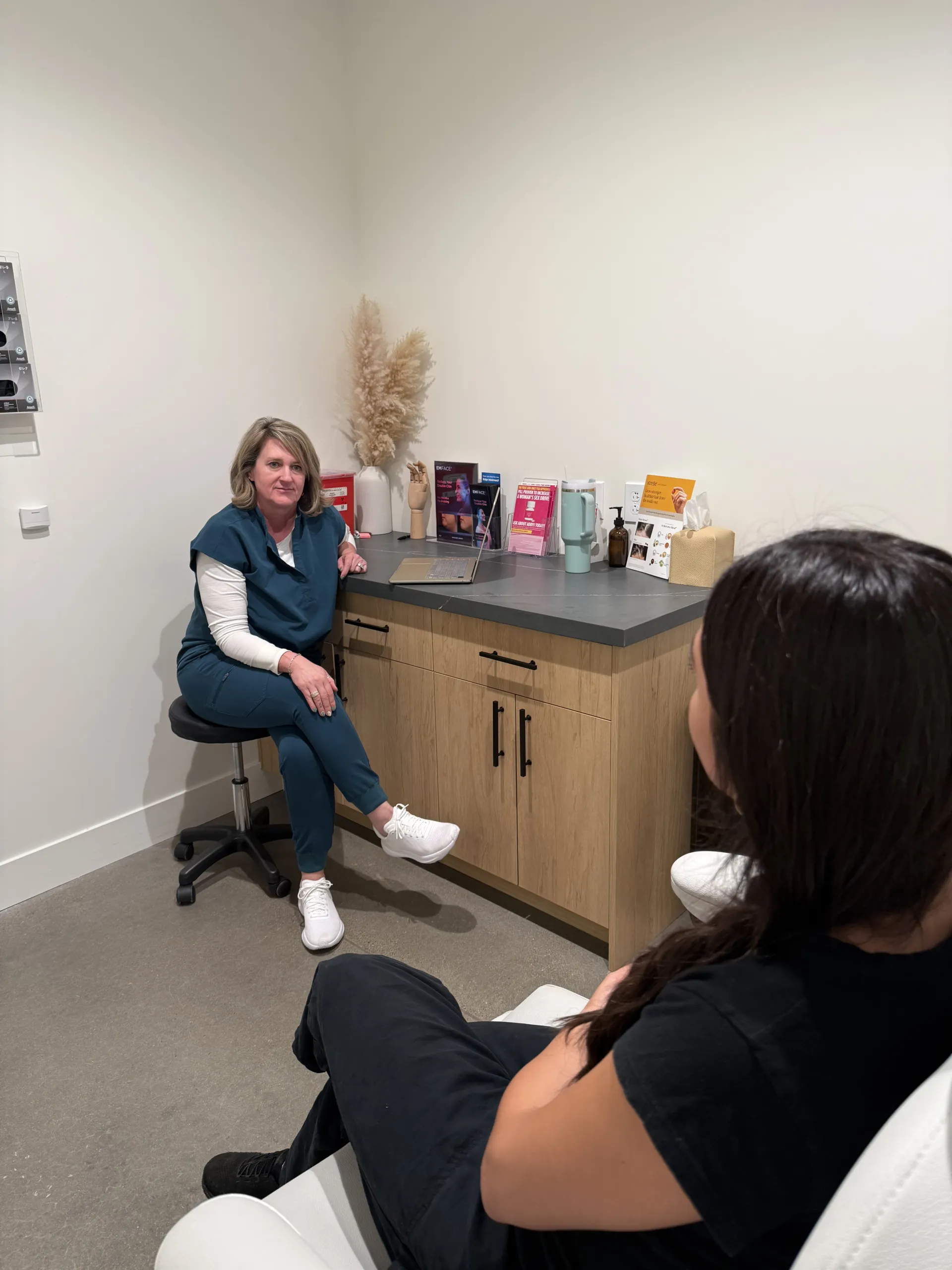
Melynda Fenn, FNP-C, talking with a patient during a hormone consultation at AZ Vitality and Wellness in Peoria, AZ

Every plan starts with a real conversation. Here, Melynda Fenn, FNP-C, meets with a patient at our Peoria clinic.

Hormone Replacement Therapy at a Glance

Who it’s for

Women in perimenopause or menopause, and men with confirmed low testosterone

First step

A $250 hormone consultation, with labs drawn here

Hormones

Estrogen, progesterone and testosterone, in the form that fits you

Cost

$179 a month membership, with follow-ups and lab panels included

Insurance

We don’t bill insurance. HSA and FSA cards welcome.

Where

7984 W Happy Valley Rd., Peoria. Open Tuesday to Saturday.

The basics

What Is Hormone Replacement Therapy?

As you get older, your body makes less of certain hormones. For women, estrogen and progesterone rise and fall unevenly through perimenopause, then drop after menopause. For men, testosterone can fall low enough to cause real symptoms. Hormone replacement therapy gives back some of what’s missing, at the lowest dose that helps, so you feel more like yourself.

You’ll also hear it called hormone therapy, menopausal hormone therapy (MHT), testosterone replacement therapy (TRT) or bioidentical hormone replacement therapy (BHRT). They all describe the same idea: a prescription hormone, chosen and dosed by a provider, and checked with labs.

For Women: Estrogen and Progesterone

For Men: Testosterone

Not Sure It’s Hormones?

Sound familiar?

Signs It May Be Time to Talk About HRT

For Women

  • Hot flashes or night sweats
  • Waking up at night, or trouble getting back to sleep
  • Periods that are changing, skipping or getting heavier in your 40s
  • Mood swings, irritability or anxiety that feel new
  • Vaginal dryness or pain with sex
  • Lower interest in sex
  • Trouble concentrating or finding words

For Men

  • Lower interest in sex
  • Fewer morning erections, or trouble with erections
  • Low energy that rest doesn’t fix
  • Losing muscle or gaining belly fat
  • Low mood or irritability
  • Trouble concentrating

Straight answers

Bioidentical Hormones: What the Word Means, and What It Doesn’t

“Bioidentical” means a hormone has the same chemical structure as the one your body makes. Estradiol, micronized progesterone and testosterone are all bioidentical, and many of them come as FDA-approved patches, gels, pills and creams that are tested for strength and purity.

  • “Bioidentical” doesn’t mean “natural” or “risk-free.” The same hormone carries the same benefits and risks, whatever the label says.
  • Compounded hormones are mixed by a pharmacy for a specific dose or form. They aren’t FDA-approved, so their strength can vary from batch to batch.
  • Most hormone pellets used for women are compounded. Once a pellet is placed, the dose can’t be lowered until it wears off.
  • The American College of Obstetricians and Gynecologists and The Menopause Society recommend FDA-approved hormones when one fits, and compounded hormones only when there’s a specific reason.

Bioidentical vs. Synthetic, in Plain Terms

BioidenticalThe same structure as your own hormones: estradiol, micronized progesterone, testosterone.

SyntheticSimilar, but not identical: conjugated estrogens and many of the progestins in birth control pills.

What matters moreThe dose, the form, your health history and how closely you’re monitored. Both types can be FDA-approved, and neither is automatically safer.

Sources: American College of Obstetricians and Gynecologists, Clinical Consensus No. 6, Compounded Bioidentical Menopausal Hormone Therapy, 2023. The Menopause Society, Hormone Therapy Position Statement, 2022. National Academies of Sciences, Engineering, and Medicine, The Clinical Utility of Compounded Bioidentical Hormone Therapy, 2020.

Your options

Your Hormone Therapy Options

Women · prescription

Estrogen

Women · prescription

Progesterone

Women · used locally

Vaginal Estrogen

Women · prescription

Testosterone for Women

Men · prescription

Testosterone for Men (TRT)

Women and men · ask at your consult

Hormone Pellets

Your first visit

How Hormone Therapy Works at Our Peoria Clinic

Book your hormone consultation

Get your labs drawn here

Go over your plan

Start low, then recheck

Stay on track

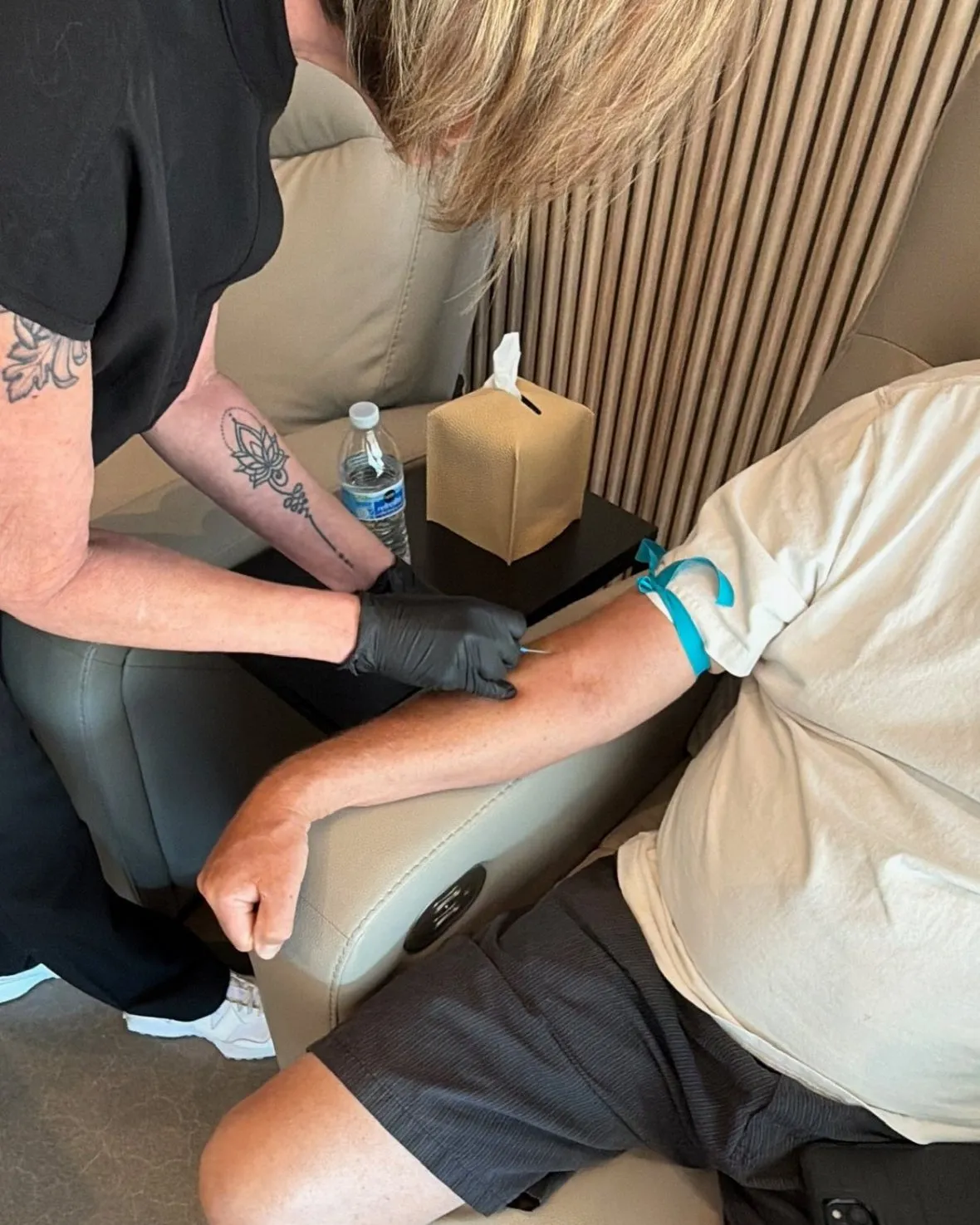
Melynda Fenn, FNP-C, drawing blood for hormone labs at AZ Vitality and Wellness in Peoria

Before Your Lab Draw

  • Men: book an early-morning draw, since testosterone is highest before about 10 am
  • Still having periods? We’ll time your draw to your cycle
  • Bring a list of your medications and supplements
  • Already using a hormone cream, gel or patch? Tell us, and when you last used it

Who it’s for

Is Hormone Replacement Therapy Right for You?

Often a Good Fit If You Have

  • Hot flashes, night sweats or sleep trouble in perimenopause or menopause, especially if you’re under 60 or within about 10 years of your last period
  • Vaginal dryness or pain with sex
  • Early menopause, before about age 45
  • For men: symptoms plus two low early-morning testosterone tests

Talk to Us First If You

  • Have had breast or uterine cancer
  • Have had a blood clot, stroke or heart attack
  • Have vaginal bleeding we haven’t explained yet
  • Have liver disease
  • For men: have prostate cancer, a high red blood cell count or untreated sleep apnea
  • For men: want to have children in the next few years
  • Are pregnant or breastfeeding

Not Sure It’s Right for You?

Ways to take it

Pills, Patches, Creams, Injections or Pellets: How the Forms Compare

The same hormone can come in different forms, and the form changes how often you take it and some of the risks. Here’s the short version.

Hormone therapy forms compared: pills, patches, gels, injections, pellets and vaginal estrogen
Form Used for How often Good to know
Pill Estrogen, progesterone Daily Easy to take. Estrogen pills carry a higher risk of blood clots than estrogen through the skin.
Patch Estrogen Changed once or twice a week Steady levels, and a lower clot risk than a pill.
Gel, cream or spray Estrogen, testosterone Daily, on the skin Let it dry. Testosterone gel can rub off on partners and kids, so cover the area.
Injection Testosterone for men Usually weekly Included in the men’s membership. We check levels with labs.
Pellet Testosterone, sometimes estradiol Every 3 to 6 months No daily dose, but it can’t be removed or lowered once placed. Pellets for women are compounded.
Vaginal cream, tablet or ring Estrogen From twice a week to every 3 months Treats dryness and pain locally, with very little absorbed.

Not every form is right for everyone. Your provider will recommend one based on your symptoms, your history and what you’ll actually use.

Cost

How Much Does Hormone Replacement Therapy Cost in Peoria?

Hormone therapy is ongoing care, so we price it as a membership instead of billing you for every visit. Here’s what it costs at AZ Vitality and Wellness.

Our prices

Hormone consultation, first visit$250

Credit when you join the same day−$100

Hormone Optimization Membership, women$179/month

Hormone Optimization Membership, men, with testosterone injections and supplies$179/month

$179 a month · Women and men

What Your Membership Includes

  • Up to 3 hormone follow-up visits a year
  • 2 to 3 hormone lab panels a year, as clinically appropriate
  • Dose adjustments and prescription management
  • Hormone and thyroid management, as appropriate
  • Messaging access for clinical questions
  • Priority scheduling

Member Perks

  • 10% off IV therapy and BTL packages
  • Up to 3 complimentary Styku body scans a year
  • A monthly credit toward our weight loss program
  • Member pricing on additional labs

Booking online? Choose “HRT for WOMEN” or “HRT for MEN.”

Safety

Is Hormone Replacement Therapy Safe?

For women

For most healthy women under 60, or within about 10 years of menopause, the benefits of hormone therapy for symptoms outweigh the risks. In November 2025, the FDA began removing the boxed warnings about heart disease, breast cancer and dementia from menopausal hormone therapy labels. The first six updated labels were approved in February 2026, and three estradiol patches followed in October 2026. The warning about uterine cancer stays on estrogen taken without progesterone, which is why women with a uterus take both.

For men

For men with confirmed low testosterone who are monitored, current evidence is reassuring. TRAVERSE, a large trial published in 2023, found no increase in heart attack or stroke with testosterone compared with placebo, and the FDA updated testosterone labels in 2025 to reflect it. Testosterone can raise your red blood cell count and lower sperm count, so we check your labs before you start and keep checking them.

Common Side Effects

  • Women: breast tenderness, bloating, spotting or headaches, most often in the first few months
  • Men: acne or oily skin, fluid retention, a higher red blood cell count and a lower sperm count
  • Most settle with time or a dose change, and your labs help us catch problems early

Get Medical Help Right Away For

  • Pain or swelling in one leg
  • Chest pain or trouble breathing
  • A sudden, severe headache
  • Changes in your vision or speech
  • Vaginal bleeding after menopause

Call or text us at 602-540-3547 with questions. If it’s an emergency, call 911.

Your providers

The Nurse Practitioners Behind Your Plan

Melynda Fenn, FNP-C, and Kenra Johnson, FNP-C, are board-certified family nurse practitioners who see both women and men for hormone care. They review your history and labs, prescribe your treatment and adjust it with you over time. You can choose who you see, and you don’t need a referral.
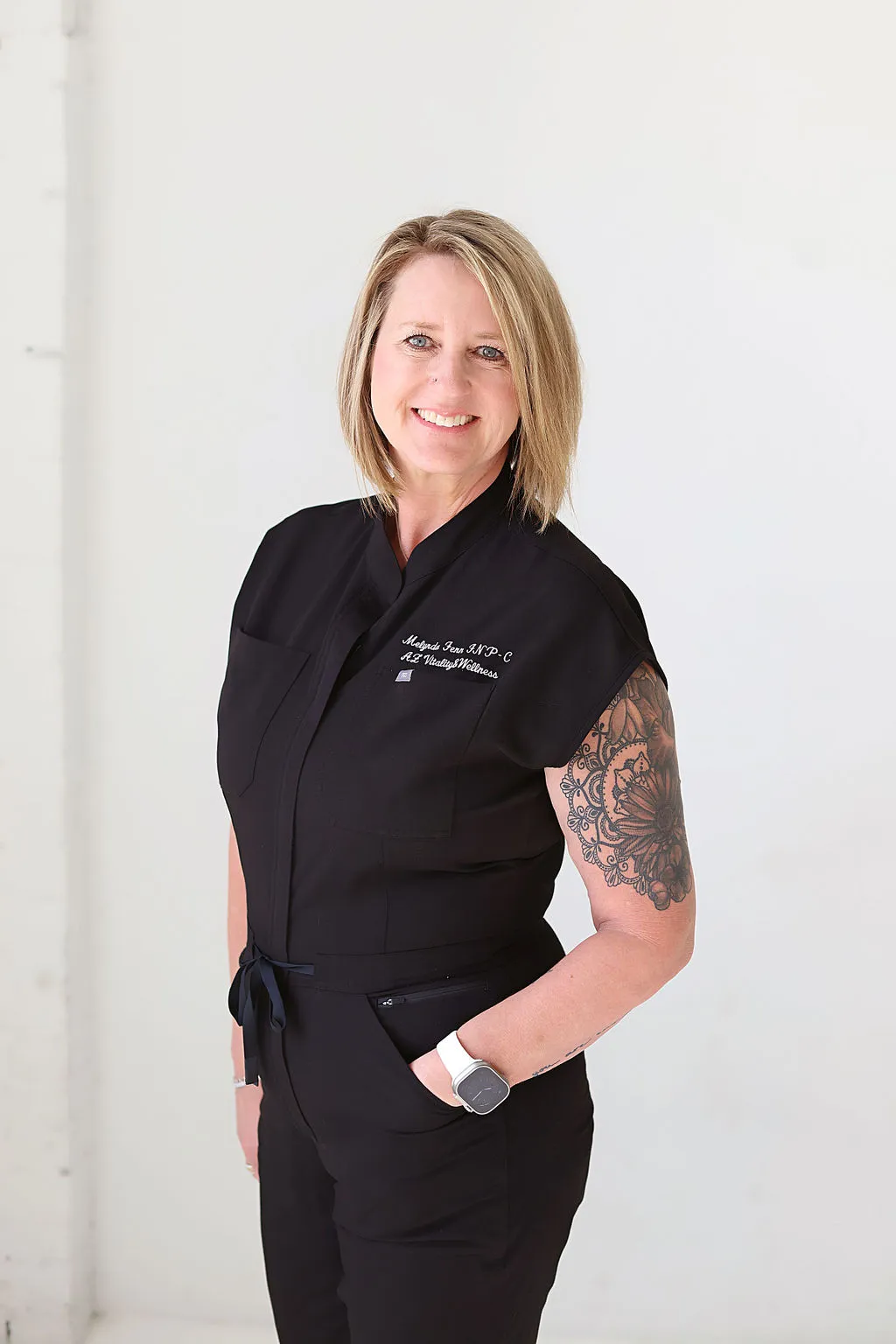
Melynda Fenn, FNP-C, founder and medical director of AZ Vitality and Wellness

Melynda Fenn

FNP-C · Founder and Medical Director

Kenra Johnson, FNP-C, nurse practitioner at AZ Vitality and Wellness

Kenra Johnson

FNP-C · Nurse Practitioner

Visit us

Hormone Replacement Therapy Near Peoria, Glendale, Surprise and the West Valley

Our clinic is in North Peoria at 83rd Avenue and Happy Valley Road, with free parking right outside. Arrowhead is about 11 minutes away, Norterra and Vistancia about 14, Sun City West about 16 and Surprise about 21.

Your hormone consultation takes about 30 to 40 minutes, and your lab draws happen right here, so there’s no second stop at an outside lab.

Reception desk at AZ Vitality and Wellness in Peoria, where hormone consultations check in

FAQ

Hormone Replacement Therapy FAQs

Hormone replacement therapy (HRT) gives back some of the hormones your body makes less of with age: estrogen and progesterone for women in perimenopause and menopause, and testosterone for men with confirmed low testosterone. At AZ Vitality and Wellness, a nurse practitioner prescribes it after a consultation and labs, and adjusts it over time.
At AZ Vitality and Wellness, your first hormone consultation is $250, with a $100 credit if you join the Hormone Optimization Membership the same day. Membership is $179 a month for women and men and includes up to 3 follow-up visits and 2 to 3 hormone lab panels a year. For men, testosterone injections and supplies are included. See membership details.
We don’t bill insurance. Many patients pay with an HSA or FSA card for eligible treatments, and Cherry payment plans are available.
You need a prescription, so a licensed provider has to evaluate you first. At our clinic, that’s a board-certified nurse practitioner who can order your labs, prescribe your hormones and monitor you. You don’t need a referral.
For most healthy women under 60, or within about 10 years of menopause, the benefits outweigh the risks. Since February 2026, the FDA has approved updated labels for a growing list of menopausal hormone therapy products without the old boxed warnings about heart disease, breast cancer and dementia. For men with confirmed low testosterone, the TRAVERSE trial found no increase in heart attack or stroke. Your own history still matters, so we review it before you start and keep checking your labs.
Bioidentical hormones have the same chemical structure as your own estrogen, progesterone and testosterone. Synthetic hormones are similar but not identical, like conjugated estrogens and the progestins in many birth control pills. Both can be FDA-approved, and neither is automatically safer. The dose, the form and your health history matter more.
Testosterone pellets for men have an FDA-approved version. Hormone pellets for women, including estradiol and testosterone pellets, are compounded and not FDA-approved. Pellets last several months and can’t be removed or lowered once placed, so we go over the trade-offs with you first.
Many women start in perimenopause, when hot flashes, night sweats or poor sleep begin to affect daily life. The best balance of benefit and risk is for women under 60 or within about 10 years of their last period. Starting later is possible for some women, with a closer look at your heart and bone health first.
Many women notice better sleep and fewer hot flashes within 2 to 4 weeks, with fuller effects over about 3 months. Men often notice more desire and energy in 3 to 6 weeks, while changes in muscle and body fat take 3 to 6 months. We recheck your labs along the way and adjust.
For women, breast tenderness, bloating, spotting and headaches are the most common, usually in the first few months. For men, acne, oily skin, fluid retention and a higher red blood cell count. Most settle with time or a dose change, and regular labs help us catch problems early.
On average, no. Studies haven’t found that hormone therapy itself causes weight gain, and some show it may limit the shift of fat to the belly after menopause. Midlife weight changes usually come from hormones, muscle loss, sleep and metabolism together, which is why some patients pair HRT with medical weight loss.
No. Some people use it for a few years, and others stay on it longer because, for them, the benefits outweigh the risks. We reassess at every follow-up, and if you want to taper or stop, we plan it with you.
Yes. For men, HRT usually means testosterone replacement therapy (TRT), for men whose symptoms and two early-morning blood tests confirm low testosterone. If you want children in the next few years, tell us first, because testosterone can lower sperm count. Learn about men’s testosterone therapy.
Yes. An underactive thyroid can cause fatigue, weight change and low mood that look a lot like low hormones, so we include a thyroid panel in your hormone labs. Your membership covers hormone and thyroid management when it’s appropriate.
At AZ Vitality and Wellness, 7984 W Happy Valley Rd., Suite 115, in North Peoria. We’re about 11 minutes from Arrowhead and 14 from Norterra, so it’s an easy trip from Glendale, Surprise, Sun City West and north Phoenix. Call or text 602-540-3547, or book online.

This page is for general education and isn’t a substitute for medical advice. Your provider will tell you whether hormone therapy is right for you.

Feel More Like Yourself Again

Start with a $250 hormone consultation and labs drawn right here. You’ll leave knowing what’s going on and what we’d recommend, with no pressure to start anything that day.