
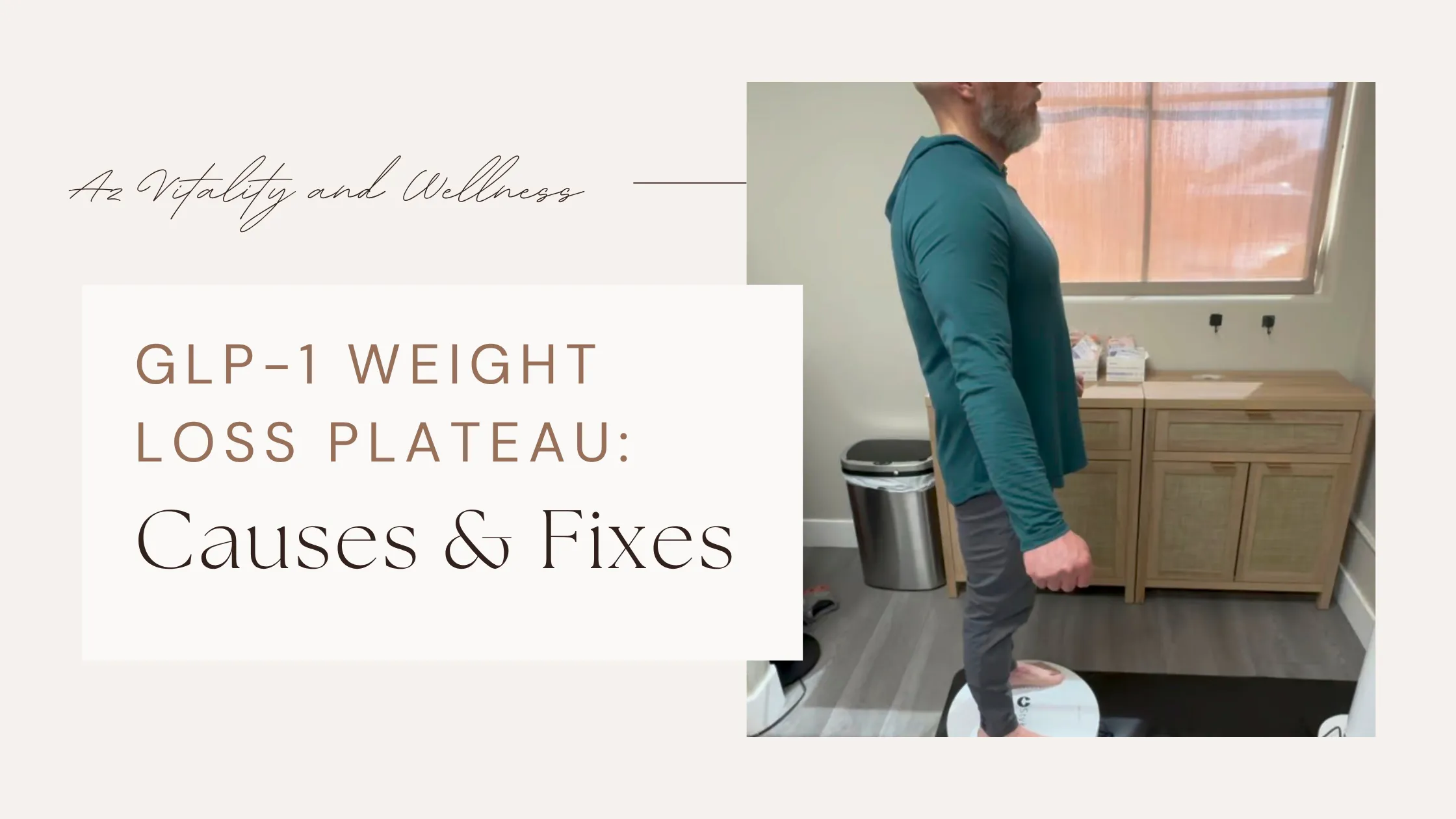
Article header: GLP-1 Weight Loss Plateau: Causes & Fixes; man stands on a scale in a clinic room beside a cabinet.

GLP-1 Weight Loss Plateau: Causes & Fixes

You started GLP-1 treatment, the weight came off steadily for a few months, and then… it didn’t. If your progress has stalled, you’re not doing anything wrong, and you’re not alone. Plateaus are one of the most common reasons patients reach out to us mid-program.

Why Plateaus Happen

A slowdown doesn’t usually mean the medication “stopped working.” More often, it’s one or more of these factors:

  • Your body is adapting. As you lose weight, your metabolic rate naturally decreases somewhat — your body needs fewer calories to maintain a smaller frame.

  • Dose timing. Many GLP-1 protocols involve gradual dose titration. If you’ve been on the same dose for a while, a review may be needed to determine whether an adjustment is appropriate.

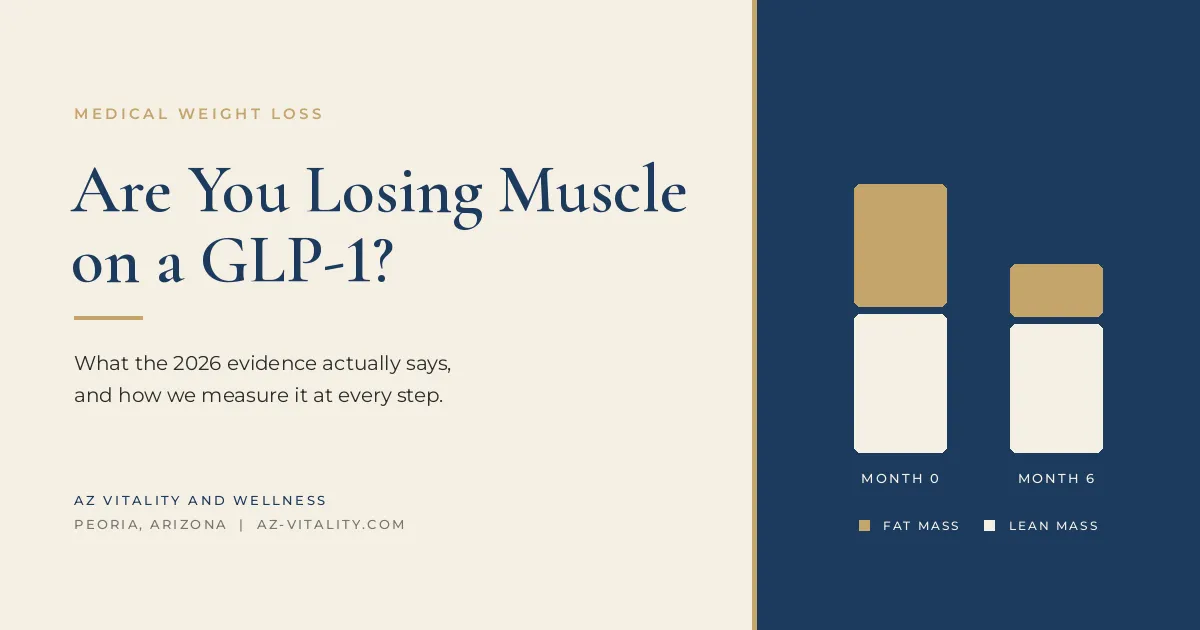
  • Muscle loss is hiding your progress. The scale measures total weight, not composition. If you’re losing muscle along with fat, the number on the scale can plateau even as your body composition continues to change.

  • Something else is working against you. Thyroid function, insulin resistance, cortisol/stress patterns, sleep quality, and hormone changes (especially during perimenopause or with low testosterone) can all influence how readily your body loses weight — with or without GLP-1 medication.

What We Look At When Progress Stalls

Instead of just increasing the dose and hoping for the best, a plateau is a good reason to zoom out. At AZ Vitality and Wellness, that typically means:

  • 1

    Reviewing your current plan — dose, timing, and how your body has responded so far.

  • 2
    Looking at body composition, not just weight — a Styku 3D body scan can show whether you’re maintaining muscle while losing fat, even if the scale hasn’t moved much.
  • 3
    Considering lab work — thyroid, blood sugar/insulin, and hormone markers can reveal contributing factors that diet and medication alone won’t fix. Learn more about our lab testing.
  • 4
    Revisiting protein intake and strength training — both matter more, not less, as you lose weight, to protect the muscle mass that keeps your metabolism running.

When Hormones Might Be the Missing Piece

If your plateau comes with other symptoms — fatigue, poor sleep, mood changes, low libido, or stubborn belly fat that doesn’t budge — it may be worth exploring whether a broader hormone imbalance is part of the picture. You can read more on our Hormone Imbalance page.

Frequently Asked Questions

Yes. Weight loss is rarely linear, and a slower rate of loss — or a temporary plateau — is common as your body adjusts.

Not necessarily, and not without provider guidance. A dose change is only one of several possible responses to a plateau; a fuller review of your plan is usually the better first step.

Yes, hormonal factors such as thyroid function, insulin resistance, and menopause-related changes can influence how your body responds to a weight-loss program.

Not seeing the progress you expected? Schedule a check-in or call/text 602-540-3547.