
Mental wellness · Peoria, AZ

Brain Fog and Mental Wellness Care in Peoria, AZ

Feeling foggy, drained, or not like yourself? You’re not imagining it. Our nurse practitioners start with a real conversation and labs drawn right here at the clinic to find what’s behind it, then build a plan around what we find.
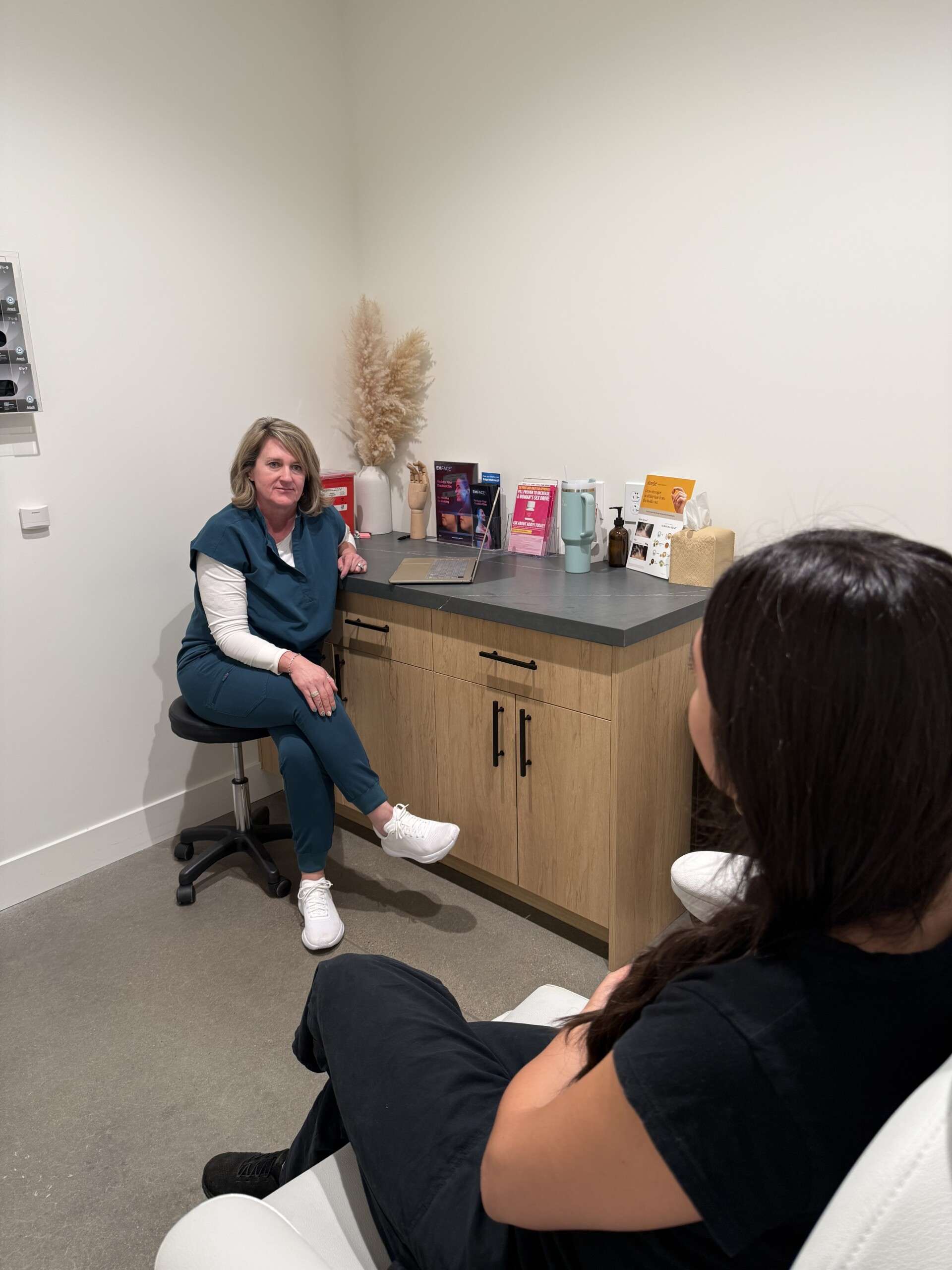
Melynda Fenn, FNP-C, talking with a patient in an exam room at AZ Vitality and Wellness in Peoria, AZ

EXOMIND TMS

When depression hasn’t lifted with medication

EXOMIND is an FDA-cleared, non-invasive TMS treatment for adults with major depressive disorder whose symptoms haven’t improved enough on antidepressants. You’re awake for every session, with no sedation and no downtime.

Melynda Fenn, FNP-C, positioning the EXOMIND coil for a patient at AZ Vitality and Wellness in Peoria, AZ

In-house labs

Answers start with labs, not guesses

Thyroid, vitamin D, B12, iron, and hormone levels can all affect focus, mood, and energy. We draw your labs during your visit, so there’s no separate trip to an outside lab.

Blood sample tubes ready for lab testing

Mental wellness care at AZ Vitality and Wellness in Peoria starts with finding out why you feel foggy, drained, stressed, or flat. A nurse practitioner reviews your symptoms, sleep, stress, and medications, and checks for common physical causes with labs drawn here at the clinic, such as thyroid problems, low vitamin D, B12, or iron, and hormone changes. For adults with depression that medication hasn’t relieved, we also offer EXOMIND, an FDA-cleared TMS treatment, alongside the care you already have.

Brain fog, low motivation, and trouble focusing are symptoms, not diagnoses. Two people with the same complaint can have completely different reasons behind it. One might have low vitamin D and poor sleep; another might be in perimenopause, or have low testosterone. That’s why we look at the whole picture before recommending anything. It saves you time and money on things that would never help.

In crisis or thinking about suicide? Call or text 988, the Suicide and Crisis Lifeline, any time. In an emergency, call 911.

At a glance

Start with a consult
About 30 to 40 minutes with a nurse practitioner

Labs in the clinic
Drawn during your visit, with no outside lab trip

EXOMIND sessions
About 20 to 30 minutes, awake, with no downtime

Payment
We don’t bill insurance. HSA and FSA cards welcome, plus Cherry payment plans

Location and hours
7984 W Happy Valley Rd., Suite 115, Peoria · Tue to Fri 9 am to 5 pm, Sat 10 am to 3 pm

Find the cause

Why Do I Feel Foggy, Drained, or Not Like Myself?

Many people come in saying the same thing: I just don’t feel like myself. Focus slips, motivation fades, sleep doesn’t restore you, and small stresses feel bigger than they should.

Those changes are real, and they usually have more than one cause. Some are physical and show up on labs. Some come from sleep, stress, or a season of life like perimenopause. And sometimes they’re signs of depression, which can look like brain fog and exhaustion long before it looks like sadness.

Your first visit sorts out which of these is in play for you, and we’ll be honest about which ones we treat here and which ones need a referral.

What we look at, and how we check

  • SleepYour sleep habits, snoring, and shift work, with a sleep study referral if apnea seems likely
  • ThyroidA thyroid panel, drawn here at the clinic
  • Vitamin D, B12, and ironNutrient labs, including ferritin
  • Hormone changesHormone testing for women and men, including perimenopause, menopause, and low testosterone
  • Blood sugar and weightMetabolic labs
  • Stress and burnoutA conversation about your workload, sleep, and support
  • MedicationsA review of what you take, since some can cause fog or fatigue
  • DepressionA short screening questionnaire, then a referral or EXOMIND when it fits

Your provider orders only what fits your symptoms and history.

Brain fog

Brain Fog: What It Feels Like, What Causes It, and What Helps

Brain fog isn’t a diagnosis. It’s a name for a cluster of symptoms that can come from many places, which is why the fix depends on the cause.

What it feels like

Thinking through fog

What causes it

Usually more than one thing

What helps

Treating the cause

Get care right away if fog comes on suddenly

Sudden confusion, trouble speaking, weakness or numbness on one side, a severe headache, or a big change in thinking over hours or days isn’t ordinary brain fog. Call 911.

Stress and burnout

How Chronic Stress and Burnout Affect Your Body

Stress affects both the mind and the body. When it becomes chronic, it can wear on your sleep, energy, appetite, concentration, mood, recovery, and hormone balance.

We can check for physical problems that make stress harder to handle, like poor sleep, thyroid issues, or low iron, and help you plan for better sleep and recovery. For the stress itself, a counselor or therapist is often the most useful next step, and we’re glad to help you find one.

Burnout, or something more?

Burnout usually eases with rest and time away. If low mood, loss of interest, hopelessness, or changes in sleep and appetite last two weeks or more and don’t lift with rest, talk with a professional about depression. It’s common, and it’s treatable.

Labs and hormones

Hormones, Thyroid, and Nutrient Levels: What Your Labs Can Show

Hormones influence much more than metabolism. Shifts in estrogen, progesterone, testosterone, and thyroid hormone can affect mood, focus, motivation, sleep, energy, and how you handle stress.

For women, brain fog and mood changes are among the most common signs of perimenopause and menopause, often years before periods stop. For men, low testosterone can show up as low energy, low motivation, and trouble concentrating.

Nutrients matter too. Low vitamin D, B12, or iron can cause fatigue and poor concentration, and they’re simple to check.

What a wellness lab panel may include

  • Thyroid
  • Vitamin D, B12, iron, and ferritin
  • Testosterone, estrogen, and other hormones, for women and men
  • Cortisol, when your provider thinks it will help
  • Metabolic labs, including blood sugar

Fasting depends on the panel. We’ll tell you ahead of time.

EXOMIND TMS

EXOMIND TMS Therapy for Depression in Peoria

EXOMIND is a transcranial magnetic stimulation (TMS) system made by BTL. A coil placed against your head sends magnetic pulses to an area of the brain involved in mood. It’s non-invasive: no needles, no anesthesia, and no medication.

EXOMIND is FDA-cleared to treat major depressive disorder in adults whose symptoms haven’t improved enough with antidepressant medication in their current episode. It’s added to your care, not a replacement for it, and many people keep their current medication and therapy during a series.

Sessions happen in our office while you’re awake and seated. Most people feel a light tapping or tingling on the scalp. You can drive yourself and go right back to your day.

Some people ask about EXOMIND for focus or stress without a depression diagnosis. That isn’t what it’s FDA-cleared for, and research on TMS as a general wellness treatment is limited, so we’ll talk through honestly whether it makes sense for you.

EXOMIND may be a fit if you:

  • Are an adult diagnosed with major depressive disorder
  • Haven’t gotten enough relief from antidepressant medication
  • Want a non-drug option to add to your current care
  • Can come in for a series of in-office sessions

EXOMIND isn’t the right fit if you:

  • Are having thoughts of suicide right now (call or text 988, or call 911)
  • Have metal or electronic implants in or near your head, like a cochlear implant, aneurysm clips, or a brain stimulator
  • Have a history of seizures or epilepsy
  • Have bipolar disorder or psychosis and aren’t under a psychiatrist’s care

We review your full history before your first session.

Compare your options

EXOMIND vs. Traditional TMS vs. Antidepressants

EXOMIND compared with traditional TMS and antidepressant medication
Compare EXOMIND at AZ Vitality and Wellness Traditional TMS (psychiatry practice) Antidepressant medication
What it is Non-invasive magnetic stimulation with BTL’s TMS system Non-invasive magnetic stimulation with systems like NeuroStar or MagVenture A daily pill that changes brain chemistry
FDA status FDA-cleared for major depressive disorder in adults after medication hasn’t helped enough FDA-cleared for depression; some systems also for OCD, migraine, or quitting smoking FDA-approved; many options
Time per session About 20 to 30 minutes About 3 to 40 minutes, depending on the protocol None; taken at home
Typical course A series of sessions, set at your consultation Usually five days a week for about four to six weeks Often 4 to 8 weeks to feel the full effect, then usually continued for months
Common side effects Scalp discomfort or tingling, sometimes a mild headache Scalp discomfort and headache; seizures are rare Varies by drug: nausea, sleep or weight changes, sexual side effects
Paying for it Self-pay; HSA and FSA cards welcome Often covered by insurance when criteria are met, usually with prior authorization Usually covered by insurance
Best for Adults with depression who want a non-drug option close to home, in a clinic that also checks labs and hormones People who need insurance coverage or a psychiatrist directing treatment The usual first treatment for depression, often alongside therapy

If you need TMS billed to insurance, or your depression needs a psychiatrist directing your care, a psychiatry practice is the better fit, and we’ll tell you so.

What to expect

What to Expect at Your First Visit

Plan on about 30 to 40 minutes for your first consultation.

Book your visit

Book a consultation online for brain fog, stress, or low energy, or a free EXOMIND consult. Prefer to talk first? Call or text 602-540-3547.

Talk it through

Your nurse practitioner asks about your symptoms, sleep, stress, medications, and health history, and may use a short screening questionnaire.

Labs, if needed

If labs make sense, we draw them during your visit. Some panels need fasting, and we’ll tell you ahead of time.

Your plan

We go over your results together and recommend next steps: treatment here, changes you can make at home, a referral, or a mix.

Follow up

We check in on how you’re doing and adjust. If EXOMIND is part of your plan, we schedule your series.

Your safety

When to See a Mental Health Specialist Instead

We focus on the physical side of mental wellness and offer EXOMIND for depression. We don’t provide talk therapy or crisis care, and some conditions are best managed by a psychiatrist. Knowing the difference gets you to the right help faster.

Get help now if you:

  • Are thinking about suicide or harming yourself
  • Feel unsafe, or can’t take care of yourself
  • Are hearing or seeing things others don’t

Call or text 988 (Suicide and Crisis Lifeline) any time, call 911, or go to the nearest emergency room.

A therapist or psychiatrist may be the better first step if you:

  • Have symptoms that started after a trauma
  • Have bipolar disorder, psychosis, or an eating disorder
  • Have tried several medications and want a psychiatrist’s plan
  • Want ongoing talk therapy

Questions to ask any clinic offering TMS

  1. Is the device FDA-cleared for my condition?
  2. Who reviews my history and oversees my treatment?
  3. How many sessions will I need, and what’s the total cost?
  4. How will we measure whether it’s working?

Cost

How Much Does Mental Wellness Care Cost?

We don’t bill insurance, so you’ll know the price before you book, and you can use your HSA or FSA card. Your first step is a consultation. Lab costs depend on which panels your provider orders, and we’ll go over them with you before your draw.

What you’ll pay, step by step

Mental wellness costs at AZ Vitality and Wellness
ConsultationAbout 30 to 40 minutes with a nurse practitioner $250
Lab workPriced by the panels your provider orders Varies
EXOMIND consultationTo see whether EXOMIND fits Free
EXOMIND seriesNumber of sessions set at your consultation Quoted at consult

Meet your providers

Nurse practitioners who actually listen.

AZ Vitality and Wellness is led by board-certified family nurse practitioners with backgrounds in emergency medicine, trauma and women’s health. Your mental wellness plan lives in the same clinic as your labs, hormone care, and weight loss, so nothing gets looked at in isolation.

Melynda Fenn, FNP-C, founder and medical director of AZ Vitality and Wellness

Melynda Fenn

FNP-C · Founder and Medical Director

Kenra Johnson, FNP-C, nurse practitioner at AZ Vitality and Wellness

Kenra Johnson

FNP-C · Nurse Practitioner

Visit us

Mental Wellness Care Near Peoria, Glendale, Surprise, and the West Valley

We’re at 7984 W Happy Valley Rd., Suite 115, Peoria, AZ 85383, in North Peoria. It’s about 11 minutes from Arrowhead Towne Center, 14 from Vistancia or Norterra, 16 from Sun City West, and about 20 from Surprise. Patients also come from North Phoenix and Anthem.

EXOMIND is a series of in-office sessions, so a clinic close to home or work makes it easier to keep every appointment. We’re open Saturdays, too.

Our Peoria clinic

  • 7984 W Happy Valley Rd., Suite 115
    Peoria, AZ 85383 · Free parking
  • Open Tuesday through Friday from 9 am to 5 pm and Saturday from 10 am to 3 pm. Walk-ins are welcome when a provider is available.
  • Call or text 602-540-3547

FAQ

Mental Wellness and EXOMIND FAQs

Mental wellness care looks after your emotional and cognitive health: focus, mood, stress, sleep, and energy. At AZ Vitality and Wellness in Peoria, it starts with finding physical causes like hormone, thyroid, or nutrient problems, and includes EXOMIND TMS for adults with depression that medication hasn’t relieved.
Common causes include poor sleep, chronic stress, hormone changes like perimenopause or low testosterone, thyroid problems, low vitamin D, B12, or iron, blood sugar swings, some medications, and depression. Often more than one is involved, which is why we start with a conversation and labs.
Yes. Changes in estrogen, progesterone, testosterone, and thyroid hormone can affect focus, mood, motivation, sleep, and energy. Brain fog is one of the most common symptoms women report in perimenopause and menopause.
Usually not. When the cause is found and treated, whether it’s poor sleep, a deficiency, a hormone change, or depression, thinking usually clears. Sudden or worsening confusion is different and needs urgent care.
Absolutely. Sleep plays a critical role in memory, focus, mood, and recovery. If you snore or wake up tired no matter how long you sleep, tell us: sleep apnea is a common and treatable cause of brain fog.
EXOMIND is a non-invasive transcranial magnetic stimulation (TMS) system made by BTL. It’s FDA-cleared to treat major depressive disorder in adults whose symptoms haven’t improved enough with antidepressant medication. Sessions are done in our office while you’re awake, with no sedation and no downtime.
EXOMIND is FDA-cleared for major depressive disorder in adults whose depression hasn’t improved enough with medication. It isn’t cleared as a stand-alone treatment for anxiety, though some TMS systems are cleared to ease anxiety symptoms that come with depression. Your provider will tell you whether it fits your situation.
TMS (transcranial magnetic stimulation) uses magnetic pulses from a coil placed against your head to stimulate an area of the brain involved in mood. It’s not shock therapy (ECT): there’s no anesthesia and no seizure, you’re awake the whole time, and you can drive yourself home.
TMS is generally well tolerated. The most common side effects are scalp discomfort, tingling, or a mild headache during or after sessions. Seizures are rare. It isn’t for people with metal or electronic implants in or near the head, and we review your history before your first session.
Most patients have a series of 6 to 20 sessions, depending on their condition and goals. Your provider sets your plan at your consultation and checks your progress as you go.
We don’t bill insurance for EXOMIND or any of our services, but you can use your HSA or FSA card. Traditional TMS at a psychiatry practice is often covered when certain criteria are met, so if insurance coverage matters most, that may be the better route for you.
A first consultation with a nurse practitioner takes about 30 to 40 minutes and costs $250. Lab costs depend on the panels your provider orders, and EXOMIND consultations are free.
No referral is needed to book a consultation. EXOMIND is FDA-cleared for diagnosed major depressive disorder, so if you haven’t been diagnosed, we’ll start with an evaluation and talk about the right next step.
Yes, and we encourage it. Lab-guided care and EXOMIND work alongside therapy and medication, not instead of them. With your permission, we’re glad to share results with your other providers.
Call or text 988 to reach the Suicide and Crisis Lifeline any time, or call 911 in an emergency. We’re not a crisis service, and we want you to get help right away.
Start with a consultation. We’ll look at your symptoms, history, and labs, and recommend a plan, whether that’s treatment here, EXOMIND, a referral, or a mix.

Book a Mental Wellness Consultation in Peoria, AZ

Whether it’s brain fog, stress that won’t let up, or depression that hasn’t lifted, we’ll help you find what’s behind it and tell you honestly what will help. Book online, or call or text us first.

Medical disclaimer: This page is for educational purposes only and is not a substitute for professional medical advice, diagnosis, or treatment. Always consult a qualified healthcare provider with questions about your health. If you’re in crisis, call or text 988. Individual results vary.