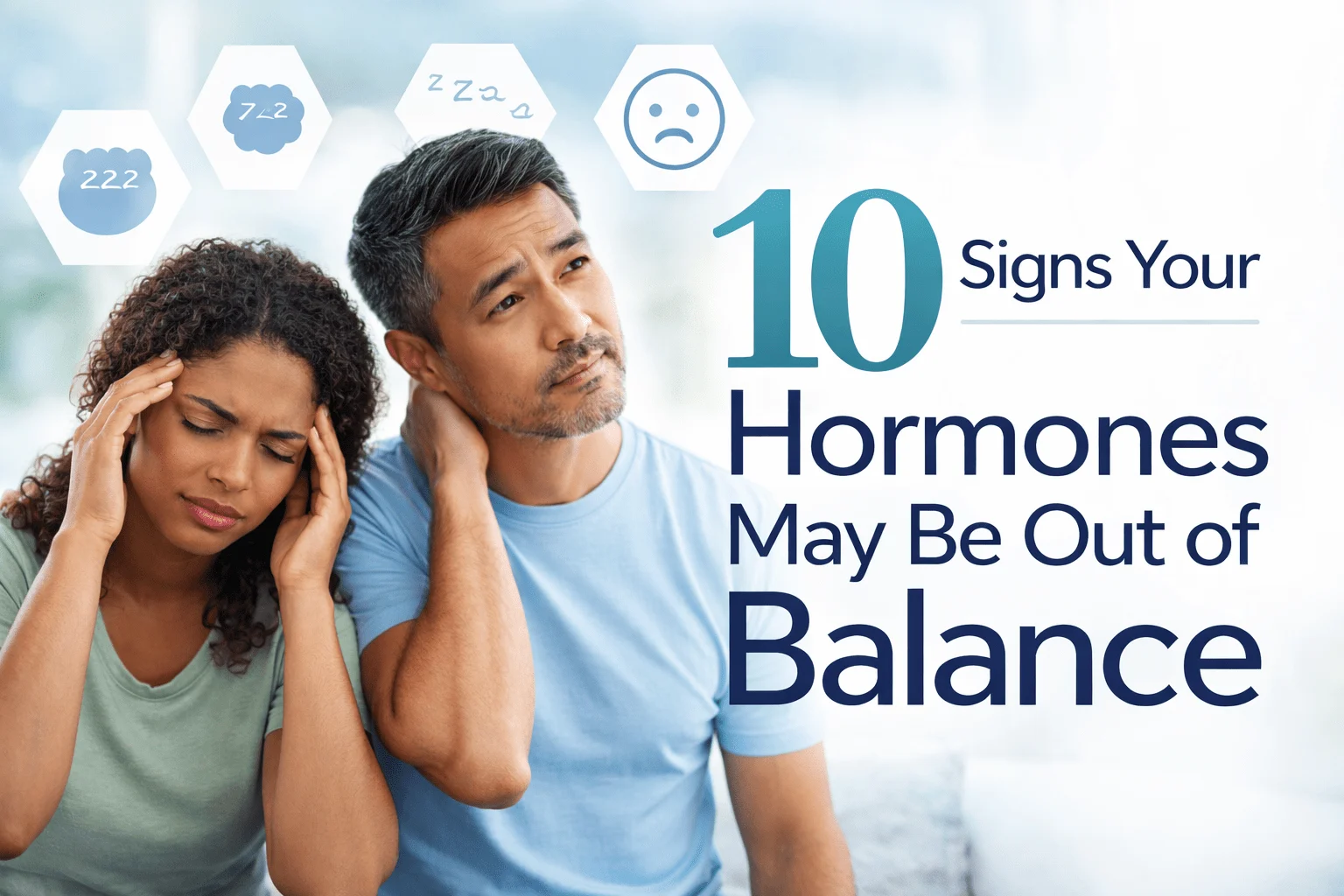
10 Signs Your Hormones May Be out of Balance
Last updated: July 2026
Medically reviewed by Melynda Fenn, NP
What are Hormones?
Hormones are chemical messengers produced by glands in the endocrine system. These glands release hormones into the bloodstream, allowing them to circulate throughout the body and signal various essential functions. Hormones play a significant role in regulating metabolism, energy levels, mood, sleep cycles, appetite, body temperature, and reproductive health. Recognizing early signs of hormonal imbalance can help you address concerns sooner.
How Imbalances Affect the Body
Because hormones influence multiple systems at once, even small changes in hormone levels can impact how the body functions. If hormone production becomes too high or too low, the body’s communication system may become disrupted. This imbalance can lead to hormone imbalance symptoms such as hormone-related fatigue, hormonal weight gain, brain fog, mood swings, poor sleep, low libido, and difficulties in maintaining a healthy metabolism.
Key Glands Involved
Several glands work together to maintain hormonal balance, including the thyroid gland, adrenal glands, pancreas, ovaries, and testes. These glands constantly adjust hormone production in response to changes in the body, such as stress levels, nutrition, and aging. In particular, thyroid imbalance symptoms may include changes in energy, weight, temperature sensitivity, hair, or skin.
What causes hormonal imbalance?
Hormonal changes can occur naturally during various life stages, including puberty, pregnancy, perimenopause, menopause, and andropause in men. However, factors such as chronic stress, poor sleep, metabolic disorders, thyroid conditions, and certain lifestyle choices can also disrupt hormone levels.
Natural Shifts and Common Disruptors
Hormonal imbalance can develop for many different reasons, and often more than one factor is involved at once. Chronic stress keeps cortisol elevated, which can throw off the balance of other hormones over time.
Thyroid conditions such as hypothyroidism or hyperthyroidism directly disrupt metabolism, energy, and mood regulation. Insulin resistance and metabolic syndrome interfere with how the body manages blood sugar and fat storage, often triggering a cascade of related hormonal shifts.
Natural life transitions, including puberty, pregnancy, perimenopause, menopause, and andropause, all involve significant and expected changes in hormone production. Conditions such as PCOS (polycystic ovary syndrome) can also cause ongoing hormonal disruption, particularly affecting the menstrual cycle and metabolism.
Poor sleep, certain medications, and nutrient deficiencies round out the most common contributing factors. Because these systems are so interconnected, identifying the specific cause behind a hormonal imbalance usually requires proper testing rather than guesswork.
A closer look at perimenopause symptoms
Perimenopause, the transitional period leading up to menopause, can bring a distinct cluster of symptoms as estrogen and progesterone levels begin to fluctuate. Common signs include irregular periods, hot flashes, night sweats, mood changes, disrupted sleep, and changes in libido, many of which overlap with the ten signs covered above.
Because perimenopause can begin years before menopause itself, some women mistake these symptoms for stress or aging rather than a hormonal shift. Hormone testing can help clarify whether perimenopause is contributing to these changes and guide an appropriate treatment plan.
Why Early Recognition Matters
Understanding how hormones operate is the first step in recognizing the symptoms of imbalance and seeking appropriate treatment. When hormone levels are properly evaluated and managed, many people experience improvements in energy, metabolism, mood, and overall wellness.
Sign 1: Slowed Metabolism and Weight Changes
Hormones such as insulin, cortisol, and thyroid hormones play a crucial role in regulating metabolism and the body’s production and use of energy. Insulin helps control blood sugar and determines whether the body uses glucose for energy or stores it as fat. Cortisol, the body’s main stress hormone, affects fat storage, blood sugar levels, and the body’s stress response. Thyroid hormones regulate metabolic rate and influence how efficiently the body burns calories.
When these hormones become unbalanced, metabolism can slow down or work less effectively. This may lead the body to store more fat, burn fewer calories, and increase cravings for sugar or carbs, making weight loss harder even with healthy habits. In some cases, this presents as hormonal weight gain that is resistant to typical diet and exercise strategies.
Hormonal imbalances related to metabolism are often connected to conditions like hypothyroidism, insulin resistance, metabolic syndrome, and chronic stress. These imbalances can cause unexplained weight gain, fatigue, trouble losing body fat, and fluctuating energy levels. Proper hormone assessment and targeted treatment can help restore balance and support healthier weight management.
Hormonal imbalance can make weight management difficult. In some cases, patients benefit from a medically supervised weight loss program designed to address metabolic and hormonal factors.
Sign 2: Persistent Fatigue
Low testosterone, thyroid imbalance, or cortisol dysfunction can lead to persistent fatigue that doesn’t improve with sleep. Hormones play a central role in regulating how the body produces and uses energy throughout the day. When testosterone levels are low, the body may struggle with muscle recovery, endurance, and overall vitality. Thyroid hormones regulate metabolic activity in nearly every cell of the body, so when thyroid function slows, people can feel drained, sluggish, and mentally foggy even after a full night’s rest.
Cortisol, often called the body’s primary stress hormone, also significantly influences energy levels. When cortisol becomes chronically elevated or dysregulated due to prolonged stress, poor sleep, or an underlying hormonal imbalance, it can disrupt the body’s natural energy rhythm. Many people experience mid-day crashes, difficulty concentrating, and a constant sense of exhaustion despite adequate sleep and healthy lifestyle habits. Identifying and correcting these hormone imbalances through proper testing and personalized treatment can help restore natural energy levels and improve overall daily performance.
Some patients explore treatments such as peptide therapy to support energy levels, recovery, and overall metabolic health.
Sign 3: Brain Fog and Cognitive Changes
Hormones play an important role in how the brain functions, influencing memory, focus, and overall cognitive clarity. When hormone levels fluctuate or become imbalanced, many people begin to notice difficulty concentrating, slower thinking, or what is commonly described as “brain fog.” Estrogen, progesterone, testosterone, thyroid hormones, and cortisol all help regulate how brain cells communicate with one another. When these hormones are out of balance, that communication can slow down, making it harder to stay focused, process information quickly, or keep track of daily tasks. When driven by endocrine shifts, this is sometimes referred to as hormonal brain fog.
Many patients experiencing hormone-related brain fog report struggling to concentrate, forgetting small details, feeling mentally fatigued, or having difficulty staying engaged throughout the day. While occasional lapses in focus can happen to anyone, persistent problems with clarity or concentration may signal an underlying hormonal imbalance. Identifying these imbalances through proper testing and addressing them with personalized treatment can help restore mental clarity, improve focus, and support better cognitive performance.
Sign 4: Mood Swings, Anxiety, or Low Mood
Hormonal fluctuations can significantly affect mood and emotional well-being. When key hormones such as estrogen, progesterone, testosterone, thyroid hormones, and cortisol rise or fall outside their normal ranges, they can disrupt the brain’s chemical balance. This can lead to symptoms such as irritability, heightened stress, anxiety, or feelings of depression. Many people notice these emotional shifts during periods of hormonal change, including perimenopause, menopause, postpartum recovery, or times of chronic stress.
When hormones are out of balance, the brain may struggle to regulate mood as effectively, making everyday challenges feel more overwhelming than usual. People may experience sudden mood swings, increased sensitivity to stress, or a sense that their emotions are harder to manage. Identifying and addressing hormonal imbalances through proper testing and personalized treatment can help stabilize mood, improve emotional resilience, and support overall mental well-being.
Sign 5: Low Libido
Declining hormone levels can significantly impact sexual desire in both men and women. Hormones such as testosterone, estrogen, and progesterone play a key role in regulating libido, sexual arousal, and overall reproductive health. When these hormone levels drop or fall out of balance, individuals may notice a decreased interest in intimacy, reduced sexual satisfaction, or difficulty becoming aroused. This shift can occur during natural life stages such as menopause, perimenopause, and andropause, but it can also result from chronic stress, poor sleep, certain medications, or underlying health conditions.
Low libido caused by hormonal imbalance is often accompanied by other symptoms, including fatigue, mood changes, weight gain, or difficulty concentrating. Because these changes can happen gradually, many people assume they are simply part of aging. However, hormone testing and personalized hormone therapy can help identify the underlying cause and restore balance. Addressing hormone levels may help improve sexual desire, energy levels, mood, and overall quality of life.
Sign 6: Irregular or Missed Periods
Irregular periods or missed cycles may indicate hormonal conditions such as PCOS or perimenopause. Hormones like estrogen and progesterone work together to regulate the menstrual cycle, and when those levels fluctuate or fall out of balance, the timing and consistency of periods can change. Some women may notice cycles becoming shorter or longer than usual, while others may experience skipped periods altogether or heavier or lighter bleeding than they are used to.
These changes can also come with additional symptoms such as mood swings, fatigue, weight changes, acne, or difficulty sleeping. While occasional cycle changes can happen due to stress, lifestyle shifts, or illness, ongoing irregular cycles often signal that the body’s hormone balance may need attention. Proper hormone testing and evaluation can help identify the underlying cause and guide personalized treatment options to restore balance and support overall reproductive and metabolic health.
Sign 7: Adult Acne and Skin Changes
Hormonal shifts can increase oil production in the skin, which often leads to clogged pores and persistent breakouts. Changes in estrogen, progesterone, and testosterone levels can all influence how much oil your skin produces. When these hormones become imbalanced, the skin’s natural oil glands may become overactive, making acne more common even in adults who previously had clear skin. This pattern is often referred to as hormonal acne.
Hormone-related acne often appears along the jawline, chin, or lower cheeks and may flare up around menstrual cycles or periods of stress. While skincare products can help manage symptoms, they often do not address the underlying cause. Identifying and correcting hormonal imbalances through proper testing and personalized treatment can help restore balance in the body and lead to clearer, healthier skin over time.
Sign 8: Poor Sleep or Insomnia
Hormones like melatonin, cortisol, and progesterone play an important role in regulating your body’s natural sleep–wake cycle. Melatonin signals your body when it is time to fall asleep, while cortisol helps regulate alertness and energy levels throughout the day. Progesterone can also have a calming effect on the brain and supports deeper, more restorative sleep. When these hormones are balanced, your body is better able to maintain a consistent sleep rhythm and support healthy rest.
When hormone levels become imbalanced, sleep quality often suffers. You may experience difficulty falling asleep, waking frequently during the night, or feeling exhausted even after what should have been a full night of rest. Hormonal changes related to stress, aging, menstrual cycles, or conditions like perimenopause can all disrupt these signals. Over time, poor sleep can affect energy levels, mood, metabolism, and overall health, making it an important sign that hormone levels may need further evaluation.
Sign 9: Loss of Muscle Mass or Slower Recovery
Low testosterone can reduce muscle development and slow recovery after exercise or physical activity. Testosterone plays a key role in supporting muscle protein synthesis, which is the process your body uses to repair and build muscle tissue. When levels are low, people may notice that workouts feel less effective, strength gains stall, or muscle tone gradually decreases even when maintaining the same activity level. These low testosterone symptoms can make training feel less productive.
Low testosterone can also lead to increased fatigue, reduced physical endurance, and longer recovery times after exercise. Over time, this hormonal imbalance may contribute to loss of lean muscle mass and an increase in body fat. If you’ve noticed that it is becoming harder to build strength, maintain muscle, or recover after workouts, hormone testing may help determine whether low testosterone is playing a role.
Sign 10: Hair Thinning or Increased Shedding
Hormonal imbalances can disrupt the normal hair growth cycle, leading to noticeable hair thinning, increased shedding, or slower regrowth. Hormones such as testosterone, estrogen, thyroid hormones, and cortisol all influence how hair follicles grow and rest. When these hormones fall out of balance, the growth phase of the hair cycle can shorten while the shedding phase increases, causing hair to appear thinner or less full over time. Many people first notice more hair in the shower drain, on their pillow, or when brushing their hair.
Hair loss related to hormones can also be linked to conditions such as thyroid dysfunction, high levels of androgens, chronic stress, or hormonal shifts during perimenopause and menopause. While some hair shedding is normal, persistent thinning or changes in hair texture may signal an underlying hormonal imbalance. Identifying the root cause through proper testing can help determine whether hormone optimization or other treatments may support healthier hair growth and overall hormone balance.
Who Should Consider Hormone Testing?
Patients experiencing ongoing symptoms such as fatigue, unexplained weight gain, mood changes, poor sleep, brain fog, low libido, or irregular menstrual cycles may benefit from professional hormone testing. These symptoms are often associated with imbalances in key hormones, including thyroid hormones, testosterone, estrogen, progesterone, cortisol, and insulin. Because hormones work together in complex systems throughout the body, identifying which ones are out of balance requires more than guesswork. Comprehensive testing allows providers to evaluate how these hormones interact and where dysfunction may occur.
A comprehensive hormone evaluation can help identify whether a hormone imbalance is contributing to symptoms.
What to Expect At AZ Vitality and Wellness
Step 1: In-Depth Consultation
At AZ Vitality and Wellness, hormone testing typically begins with a detailed conversation about symptoms, health history, lifestyle factors, and goals.
Step 2: Targeted Lab Testing
Targeted lab testing, sometimes called a hormone profile test or hormonal panel, is used to evaluate the hormones most likely contributing to those symptoms. Our clinic offers convenient in-house lab draws, allowing patients to complete testing during their visit rather than scheduling an additional appointment at an outside lab. This makes the process faster and helps ensure results can be reviewed and discussed more efficiently.
Step 3: Personalized Interpretation and Plan
Once results are available, they are interpreted in the context of the patient’s overall health, symptoms, and medical history. This allows for a more personalized approach to hormone optimization rather than a one-size-fits-all treatment plan. In some cases, results may indicate the need for lifestyle adjustments, metabolic support, or additional medical evaluation. In other cases, treatment options such as hormone therapy or other supportive therapies may be discussed.
What is HRT (Hormone Replacement Therapy)?
HRT, or hormone replacement therapy, is a treatment approach designed to restore hormone levels that have dropped or become imbalanced due to aging, medical conditions, or other underlying factors.
Depending on a patient’s needs, HRT may involve bioidentical hormones formulated to closely match the hormones the body naturally produces. For women, this often addresses symptoms related to perimenopause and menopause, while for men, HRT can help address symptoms of low testosterone.
Because hormone therapy affects multiple systems in the body, it should always be guided by comprehensive lab testing and ongoing monitoring from a qualified provider, rather than a standardized, one-size-fits-all dose.
Treatment Options and Ongoing Care
Hormone optimization plans may include bioidentical hormone therapy, peptide therapy, metabolic support, and medically supervised weight loss programs. These approaches are designed to help restore balance in the body as hormone levels shift due to age, stress, metabolic changes, or underlying health conditions.
At AZ Vitality and Wellness, care begins with a thorough consultation and advanced lab testing to better understand how your hormones are functioning. Instead of focusing only on a single lab number, the goal is to evaluate the full picture of your health, including symptoms, lifestyle factors, and metabolic function. This allows treatment plans to be personalized to the individual rather than using a one-size-fits-all approach.
Depending on the results of testing and your specific health goals, care plans may include bioidentical hormone therapy to help restore hormonal balance, peptide therapies that support the body’s natural repair and metabolic processes, and medically supervised weight-loss programs designed to address the hormonal drivers of stubborn weight gain. Many patients also benefit from metabolic support, nutrition guidance, and ongoing monitoring to ensure that therapy remains safe and effective over time.
Hormone health is highly personal, and the most important step is working with a qualified medical provider who takes the time to evaluate your individual needs. Whether you pursue care at AZ Vitality and Wellness or with another trusted provider, the goal should always be the same: identifying the root causes of symptoms and creating a plan that helps you feel healthier, more energized, and more like yourself again.
When to Seek Professional Support
Many people experience symptoms such as fatigue, unexplained weight gain, mood swings, poor sleep, low libido, brain fog, or difficulty losing weight. Because hormones affect many systems in the body, symptoms can vary depending on which hormones are involved.
Hormone levels are typically evaluated through blood tests that measure hormones such as testosterone, estrogen, progesterone, thyroid hormones, cortisol, and insulin. A provider will review both laboratory results and symptoms to determine whether hormone levels are contributing to health concerns.
If symptoms such as fatigue, weight gain, mood changes, low libido, or poor sleep persist for several weeks or begin interfering with daily life, it may be helpful to speak with a healthcare provider. Hormone testing can help identify whether an imbalance is contributing to these symptoms.
Hormonal changes can affect many aspects of daily life, including energy levels, metabolism, sleep quality, mood, and overall well-being. While occasional symptoms may occur during periods of stress or life transitions, persistent symptoms such as fatigue, unexplained weight gain, brain fog, or low libido may indicate an underlying hormonal imbalance.
The good news is that many hormone-related symptoms can be evaluated and treated once the underlying cause is identified. Through comprehensive hormone testing and personalized treatment plans, providers can determine whether hormone levels are contributing to your symptoms and recommend appropriate solutions.
At AZ Vitality and Wellness, patients receive individualized care designed to restore balance and support long-term health. If you are experiencing symptoms that may be related to hormonal changes, scheduling a consultation can be an important first step toward understanding what your body needs.