
Hormone health · Peoria, AZ

Hormone Imbalance Testing and Treatment in Peoria, AZ

A hormone imbalance happens when your body makes too much or too little of a hormone such as estrogen, progesterone, testosterone, thyroid hormone, cortisol, or insulin. Because these hormones help regulate energy, sleep, mood, metabolism, and sex drive, even a small shift can leave you feeling tired, foggy, or not like yourself.

If that sounds familiar, you’re not imagining it, and you don’t have to keep guessing. At AZ Vitality and Wellness in Peoria, our board-certified nurse practitioners take the time to hear your whole story, draw labs right here in our clinic when testing will actually help, and walk you through what your results mean. From there, we build a plan around you, whether that’s hormone therapy, thyroid follow-up, metabolic and weight support, or ruling hormones out so you can get to the real cause.
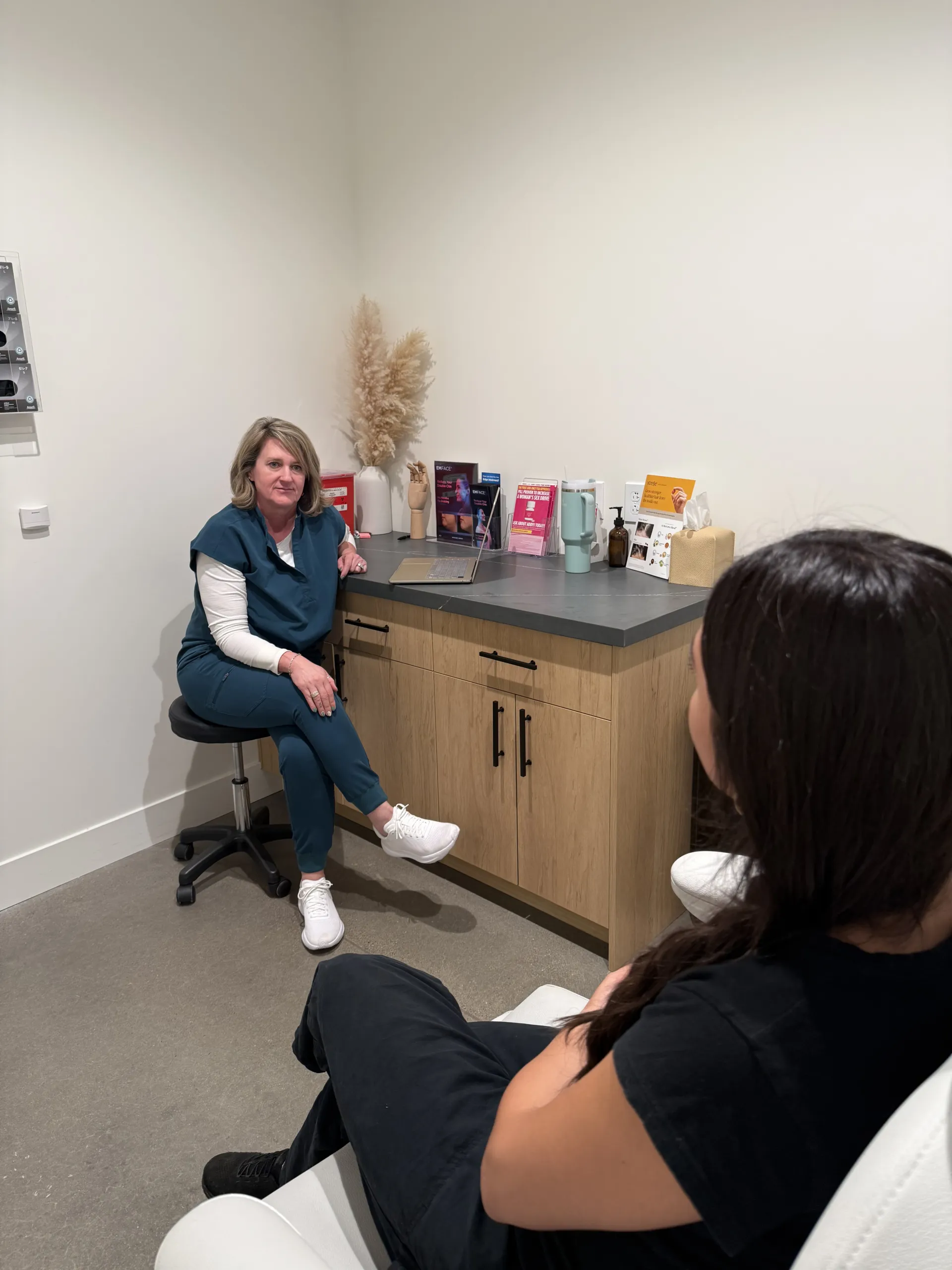

Melynda Fenn, FNP-C, during a hormone consultation at AZ Vitality and Wellness in Peoria, AZ
At a glance
Melynda Fenn, FNP-C
Kenra Johnson, FNP-C

Who you’ll see
Melynda Fenn, FNP-C, and Kenra Johnson, FNP-C, board-certified family nurse practitioners

Lab work
Drawn on-site at our Peoria clinic. No outside referral needed.

Location
7984 W Happy Valley Rd., Suite 115, Peoria, AZ 85383

Hours
Tuesday–Friday 9 am–5 pm, Saturday 10 am–3 pm

Signs and symptoms

Signs of a Hormone Imbalance

Hormone symptoms rarely arrive one at a time, and they’re easy to write off as stress, aging, or a busy season. These are the patterns we hear about most often:

Energy, mood, and focus

Fatigue that sleep doesn’t fix, brain fog, anxiety, irritability, low mood, or losing your motivation.

Sleep and body temperature

Trouble falling or staying asleep, night sweats, hot flashes, or feeling cold when everyone else is comfortable.

Weight and metabolism

Weight gain without a change in habits, more belly fat, strong cravings, losing muscle, or slower recovery after workouts.

Sex drive and sexual health

Low libido, vaginal dryness or painful sex, or changes in erections.

Cycles, skin, and hair

Irregular, heavy, or painful periods, worsening PMS, adult acne, or thinning hair.

One symptom on its own rarely tells the whole story. Several together, especially if they started around the same time, are worth a closer look.

For women

Hormone Imbalance in Women

Women’s hormones shift throughout life: during the reproductive years, after pregnancy, through perimenopause (which often begins in the 40s), and after menopause. The concerns we see most often include irregular or heavier cycles, PMS that’s getting worse, hot flashes and night sweats, poor sleep, vaginal dryness, low libido, mood changes, and weight that settles around the middle.

For men

Hormone Imbalance in Men

Testosterone naturally declines with age, and stress, poor sleep, and extra weight can push it lower. Men often notice low energy, a lower sex drive, changes in erections, losing muscle, gaining body fat, slower recovery, irritability, or a general loss of drive.

Low testosterone is a common cause, but it isn’t the only one. Thyroid function, blood sugar, sleep, and stress can all produce the same symptoms, which is why we look at the full picture before recommending testosterone therapy.

Melynda Fenn, FNP-C
Kenra Johnson, FNP-C

Your hormone care team. Melynda Fenn, FNP-C, and Kenra Johnson, FNP-C, are board-certified family nurse practitioners who see both women and men for hormone concerns. Every plan is built on your symptoms, health history, lab findings when they’re needed, and your goals. Meet the team →

Weight and metabolism

Can a Hormone Imbalance Cause Weight Gain?

Yes, it can contribute. Thyroid hormone, insulin, cortisol, estrogen, and testosterone all influence your appetite, where your body stores fat, and how much muscle you keep. Weight changes are especially common during perimenopause and menopause, with insulin resistance, with low testosterone, and with PCOS (PMOS).

If you’re eating well and staying active and the scale still won’t move, it’s worth checking hormones and metabolic markers before you blame yourself. When weight is a big part of the picture, our medical weight loss program can be built alongside your hormone plan.

Thyroid Function and Hormone Symptoms

Your thyroid sets the pace for your metabolism. When it runs low, you may feel tired, gain weight, feel cold, or notice dry skin, constipation, thinning hair, or a dip in mood. Those symptoms overlap with perimenopause and low testosterone, which is one reason thyroid markers are often part of a hormone evaluation.

Stress, Cortisol, and Burnout

Many patients describe feeling “wired but tired”: exhausted all day, then unable to switch off at night. Ongoing stress affects cortisol, which can disrupt sleep, increase cravings and belly fat, and make it harder to recover. Stress is rarely the only factor, but it’s an important part of the picture, and your provider will ask about it during your consultation.

In-house lab testing

How Do You Test for a Hormone Imbalance?

Testing starts with a conversation, not a blood draw. Your provider first reviews your symptoms, health history, medications, cycles, sleep, and stress. If lab work will help answer your questions, we draw it on-site during your appointment. Labs are ordered by your AZ Vitality and Wellness provider, so you don’t need a referral from an outside doctor.

Depending on your symptoms, your lab work may include:

  • Estrogen and progesterone
  • Testosterone
  • Thyroid panel
  • Cortisol
  • Blood sugar and insulin markers
  • Vitamin D, B12, iron, and ferritin
  • Metabolic and general wellness markers

Your provider reviews the results with you alongside your symptoms, because numbers on their own don’t tell the full story.

What we see most

Conditions We Commonly Evaluate

Perimenopause

The transition before menopause, when estrogen and progesterone fluctuate. It can bring irregular periods, mood changes, poor sleep, hot flashes, night sweats, and weight changes.

Menopause

Menopause is reached after 12 months without a period. Lower estrogen can affect sleep, mood, sexual health, body composition, and energy.

Low testosterone

Most often discussed in men, but women can have low testosterone too. It’s linked with low libido, fatigue, mood changes, and loss of muscle.

Thyroid conditions

An underactive or overactive thyroid can affect metabolism, body temperature, energy, mood, digestion, and weight.

Insulin resistance

When your cells stop responding well to insulin, blood sugar regulation suffers, which can drive cravings, fatigue, and stubborn weight gain.

Treatment options

Treatment Options for Hormone Imbalance

There’s no single fix for a hormone imbalance. The right approach depends on what’s driving your symptoms, and sometimes the answer isn’t hormones at all. Options your provider may discuss include:

Hormone replacement therapy (HRT)

For women in perimenopause or menopause and men with confirmed low testosterone, when it’s appropriate for your health history.

Women’s hormone therapy

Personalized care for perimenopause, menopause, low libido, and related symptoms.

Men’s hormone and testosterone therapy

Evaluation and treatment for low testosterone and men’s sexual health.

Medical weight loss

Provider-guided support when hormones, insulin resistance, or metabolism are part of the weight picture.

Peptide therapy

Sometimes added to a broader wellness plan. Your provider can explain whether it fits your goals.

Your first visit

What to Expect at Your Hormone Consultation

1

Talk it through

Your provider asks about your symptoms, health history, cycles, sleep, stress, energy, mood, and goals, plus any labs or treatments you’ve already tried.

2

Test if it will help

If lab work is needed, we draw it on-site during your appointment.

3

Review your results together

Your provider explains what your labs show and how they fit with how you feel.

4

Build your plan

That may include hormone therapy, thyroid or metabolic follow-up, lifestyle changes, weight support, or other services when appropriate.

5

Follow up and adjust

Hormones need careful follow-up, so we check in on how you’re feeling and adjust as your body responds.

Meet your providers

Nurse practitioners who actually listen.

Care at AZ Vitality and Wellness is led by board-certified family nurse practitioners with backgrounds in emergency medicine, trauma and women’s health. Every plan starts with listening to how you’ve been feeling.

Melynda Fenn, FNP-C, founder and medical director of AZ Vitality and Wellness

Melynda Fenn

FNP-C · Founder & Medical Director

Kenra Johnson, FNP-C, nurse practitioner at AZ Vitality and Wellness

Kenra Johnson

FNP-C · Nurse Practitioner

Is this you?

Is a Hormone Evaluation Right for You?

A hormone evaluation may be a good next step if you:

  • Feel tired, foggy, or unlike yourself and can’t pinpoint why
  • Have gained weight despite healthy habits
  • Have noticed changes in your sex drive, sleep, or mood
  • Are going through perimenopause or menopause
  • Suspect low testosterone
  • Have tried lifestyle changes without much improvement

Visit us

Serving Peoria and the West Valley

AZ Vitality and Wellness proudly serves patients throughout Peoria, Glendale, Surprise, North Phoenix, Vistancia, Lake Pleasant, and surrounding West Valley communities from our clinic at 7984 W Happy Valley Rd., Suite 115, Peoria, AZ 85383.

Our Peoria clinic

We’re open Tuesday through Friday from 9 am to 5 pm and Saturday from 10 am to 3 pm.

Call or text 602-540-3547

FAQ

Hormone Imbalance FAQs

A hormone imbalance is when your body has too much or too little of a hormone, such as estrogen, progesterone, testosterone, thyroid hormone, cortisol, or insulin. It can affect your energy, mood, sleep, weight, sex drive, menstrual cycles, and overall well-being.
The biggest clue is several symptoms showing up together, such as fatigue, brain fog, poor sleep, weight gain, low libido, mood changes, hot flashes, or irregular periods. A provider visit, with lab testing when it’s useful, is the most reliable way to find out what’s going on.
Yes. Thyroid hormone, insulin, cortisol, estrogen, and testosterone all affect appetite, fat storage, and muscle. Weight gain is especially common during perimenopause and menopause and with insulin resistance.
Usually with a blood draw chosen around your symptoms. At AZ Vitality and Wellness, your provider orders the panels that fit your situation, which may include estrogen, progesterone, testosterone, thyroid, cortisol, blood sugar, and nutrient levels, and we draw them on-site in Peoria.
No. Lab work at our clinic is ordered by your AZ Vitality and Wellness provider as part of your consultation, so you don’t need a referral from an outside doctor.
It depends on the cause. Options range from sleep, stress, and lifestyle changes to treating a thyroid or blood sugar issue to hormone replacement therapy. Your provider will explain which options fit your results and health history.
No. Hormone therapy isn’t appropriate for every patient. Recommendations should be based on your symptoms, health history, lab results, and risk factors.

Start Your Hormone Evaluation in Peoria

If you’re tired of feeling off, exhausted, foggy, or unlike yourself, you don’t have to figure it out alone. Our team will help you understand what’s going on and what you can do about it.

Medical disclaimer: This page is for educational purposes only and is not a substitute for professional medical advice, diagnosis, or treatment. Always consult a qualified healthcare provider with questions about your health.