Excessive sweating treatment · Peoria, AZ

Excessive Sweating (Hyperhidrosis) Treatment in Peoria, AZ

Hyperhidrosis is sweating far beyond what your body needs to cool down, most often in the underarms, hands or feet. At AZ Vitality and Wellness in Peoria, our nurse practitioners treat it with Xeomin injections that quiet the nerve signals to your sweat glands. Most people notice much less sweating within two weeks, and it usually lasts four to six months or longer.

Melynda Fenn, FNP-C, giving an underarm sweating treatment at AZ Vitality and Wellness in Peoria, AZ

Underarm treatment at our Peoria clinic: a grid of tiny injections, placed by Melynda Fenn, FNP-C.

Excessive Sweating Treatment at a Glance

Who it’s for

Adults whose sweating soaks through clothes even with clinical-strength antiperspirant

First step

A free 40-minute consultation with a nurse practitioner

Treatment

Xeomin injections into the skin of the sweaty area, done in our office

Cost

$900 for both underarms. HSA and FSA cards welcome.

Results

Much less sweat in about 2 weeks, usually lasting 4 to 6 months or longer

Where

7984 W Happy Valley Rd., Peoria. Open Tuesday to Saturday.

The basics

What Is Hyperhidrosis?

Everyone sweats. Hyperhidrosis is sweating that goes well past what your body needs to cool off: shirts soaked through in an air-conditioned room, damp palms that smudge paper, socks wet by noon in January. It’s a medical condition, not a hygiene problem, and it’s common. In a 2016 national survey, about 4.8% of Americans, roughly 15 million people, reported it, and only about half had ever talked to a healthcare provider about it.

There are two kinds. Primary hyperhidrosis usually starts in the teen years or early twenties, often runs in families and shows up in specific spots: underarms, hands, feet, face or scalp. The sweat glands are normal; the nerves that switch them on are overactive. Secondary hyperhidrosis comes from something else, like a medication, a thyroid problem, diabetes, an infection or menopause, and tends to cover larger areas.

Living in the Valley, it’s fair to wonder whether you only sweat because it’s 110 degrees. Heat sweat is normal. Hyperhidrosis is the sweating that keeps going in the cool months and the cool rooms.

Is It Hyperhidrosis? A Quick Check

Providers use a simple rule. It’s likely primary hyperhidrosis if you’ve had visible, excessive sweating in one or more areas for at least 6 months with no other cause, plus at least two of these:

  • It happens on both sides, about evenly
  • It gets in the way of work, school or daily life
  • It happens at least once a week
  • It started before age 25
  • Someone in your family has it too
  • It stops while you sleep

Diagnostic criteria: Hornberger et al., Journal of the American Academy of Dermatology, 2004. Prevalence: Doolittle et al., Archives of Dermatological Research, 2016.

How severe is it?

How Much Does Your Sweating Get in Your Way?

1

Never noticeable

“My sweating is never noticeable and never interferes with my daily activities.”

2

Tolerable

“My sweating is tolerable but sometimes interferes with my daily activities.”

3

Barely tolerable

“My sweating is barely tolerable and frequently interferes with my daily activities.”

4

Intolerable

“My sweating is intolerable and always interferes with my daily activities.”

A 3 or 4 counts as severe, and it’s where injections tend to make the biggest difference. At a 2, a prescription-strength antiperspirant is often worth trying first.

When Sweating Points to Something Else

Some sweating isn’t hyperhidrosis. See your primary care provider first, or tell us at your consult, if your sweating:

  • Covers most of your body instead of a few spots
  • Soaks you at night (night sweats)
  • Started suddenly as an adult, or happens on only one side
  • Comes with weight loss, fever, a racing heart or shakiness
  • Started after a new medication

Your treatment

How Xeomin Treatment for Sweating Works

Free consultation

Mapping the area

Keeping you comfortable

The injections

Back to your day

Before Your Treatment

  • Shave a day or two before, not the same day
  • Skip deodorant and antiperspirant that morning
  • Wear a top that makes your underarms easy to reach
  • Tell us about blood thinners, aspirin, ibuprofen or vitamin E, which can make bruising more likely

Straight answers

Xeomin or Botox for Sweating? Straight Answers

Botox and Xeomin are two brands of the same kind of medicine, botulinum toxin type A, and they quiet sweat glands the same way. The difference is the label. In 2004 the FDA approved Botox for severe underarm sweating that topical treatments haven’t controlled. Xeomin is FDA-approved for frown lines, forehead lines, crow’s feet and several medical conditions, but not for sweating, so using it for hyperhidrosis is off-label.

Off-label means a provider prescribes an approved medicine for a use that isn’t on its label. It’s legal and common when the evidence supports it, and here it does: head-to-head studies, including a double-blind trial on palms, found the two worked about the same for underarms and for palms.

We use Xeomin, the same product we use every day for wrinkles, and we’ll tell you that before you’re treated. If having an FDA-approved product for sweating matters most to you, say so at your consult. We don’t carry Botox, and we’re happy to point you to an office that does.

Botox vs. Xeomin for Sweating

Botox and Xeomin for sweating compared
Botox Xeomin
Medicine onabotulinumtoxinA incobotulinumtoxinA
FDA status for sweating Approved in 2004 for severe underarm sweating Off-label
How it works Blocks the nerve signal to sweat glands The same way
Evidence for underarms Large placebo-controlled trials Smaller studies, including head-to-head comparisons, with similar results
At AZ Vitality and Wellness Not stocked What we use

Sources: BOTOX prescribing information (AbbVie); XEOMIN prescribing information (Merz, revised 2026); Dressler, Journal of Neural Transmission, 2010 (underarms); Campanati et al., Journal of Neural Transmission, 2014 (palms).

Where we treat

Underarms, Hands, Feet and Face: Where We Treat

Most common

Underarms

Ask us

Hands (Palms)

Ask us

Feet (Soles)

Ask us

Face and Scalp

Your options

Every Treatment for Excessive Sweating, Compared

Injections aren’t the only option, and they aren’t always the first one. Here’s the full list of treatments the American Academy of Dermatology describes, so you can see where each one fits.

Treatments for excessive sweating compared: antiperspirant, wipes and gels, iontophoresis, injections, pills, miraDry and surgery
Treatment Best for How it works Good to know
Prescription or clinical-strength antiperspirant Mild to moderate sweating; usually the first step Aluminum chloride applied at bedtime, then once or twice a week Can irritate skin. Over-the-counter versions only help mild cases.
Prescription wipes and gels (Qbrexza, Sofdra) Underarms, ages 9 and up A daily cloth or nightly gel that blocks the sweat signal in the skin Sofdra was approved in 2024. Dry mouth and blurry vision are possible.
Iontophoresis Hands and feet A home device sends a mild current through tap water, 20 to 30 minutes a session Takes 5 to 10 sessions to work, then weekly upkeep. Less useful for underarms.
Botulinum toxin injections (Xeomin, Botox) Underarms, hands, feet and face Blocks the nerve signal to sweat glands in the treated area In-office, little downtime, lasts months, then repeat. What we offer.
Prescription pills (glycopyrrolate, oxybutynin) Sweating in many areas at once Reduce sweating throughout the body Taken every day. Dry mouth and constipation are common, and they raise the risk of overheating.
miraDry Underarms Microwave energy destroys underarm sweat glands in 1 or 2 visits Long-lasting, costs more, swelling for a few weeks. Not offered here.
Surgery (sympathectomy or gland removal) Severe cases when nothing else works Cuts the nerve or removes the glands Permanent. Often causes new sweating on the back, belly or legs.

Source: American Academy of Dermatology, “Hyperhidrosis: Diagnosis and treatment.” Sofdra approval: FDA, June 2024.

Who it’s for

Is Xeomin Treatment Right for You?

Often a Good Fit If You Have

  • Sweating that soaks through clothes or gets in the way of your day
  • Clinical-strength antiperspirant hasn’t been enough
  • A pattern that fits primary hyperhidrosis
  • You want results that last months, without a daily routine
  • You’re 18 or older

Talk to Us First If You

  • Are pregnant or breastfeeding
  • Have a nerve or muscle condition such as myasthenia gravis, Lambert-Eaton syndrome or ALS
  • Have an infection or rash where you’d be treated
  • Have ever reacted to Botox, Xeomin, Dysport or another botulinum toxin
  • Take blood thinners or certain antibiotics called aminoglycosides
  • Sweat all over or at night, which needs a medical workup first

Not Sure It’s Right for You?

Cost

How Much Does Hyperhidrosis Treatment Cost?

Our pricing is simple and posted. The consultation is free, and treatment for both underarms is $900. Hands, feet and other areas are priced at your consult, before you decide.

Our prices

Hyperhidrosis consultationFree

Treatment, both underarms$900

Hands, feet or other areasQuoted at your consult

Will Insurance Pay for It?

Some plans do cover Botox for severe underarm sweating once prescription antiperspirants have failed, usually with prior authorization through a dermatologist. Because we don’t bill insurance and Xeomin is off-label for sweating, treatment with us is self-pay. If coverage matters most, call your plan first and ask about “Botox for axillary hyperhidrosis.”

After treatment

Results, Side Effects and Aftercare

The first week

You start to notice less sweat.

About 2 weeks

Full effect. In a large Botox trial for underarm sweating, 75% of people improved by at least two points on the severity scale, compared with 25% on placebo.

4 to 6 months, often longer

Sweat slowly returns. In that trial, half of people still had results at about six and a half months.

When it comes back

Book your next treatment. Treatments are spaced at least 3 months apart.

Sources: Lowe et al., Journal of the American Academy of Dermatology, 2007; Berthin and Maillard, Acta Dermato-Venereologica, 2019 (longer results with repeat treatments).

Possible Side Effects

  • Soreness, redness or small bruises where the needle went in, gone in a day or two
  • After hand treatment, a slightly weaker grip for a few weeks
  • A few people notice a little more sweating in other areas
  • Like every botulinum toxin, Xeomin carries an FDA boxed warning that, rarely, its effect can spread beyond the treated area. We go over it with you before treatment.

Call Us or Get Care Right Away If You Have

  • Trouble swallowing, speaking or breathing
  • Blurred or double vision, or drooping eyelids
  • Muscle weakness away from the treated area
  • Hives, swelling or wheezing

In an emergency, call 911.

Your providers

The Nurse Practitioners Who Treat You

Melynda Fenn, FNP-C, and Kenra Johnson, FNP-C, are board-certified family nurse practitioners. Botulinum toxin is a prescription medicine in Arizona, and here the nurse practitioner who prescribes it is the one who injects it. You can choose who you see, and you don’t need a referral.
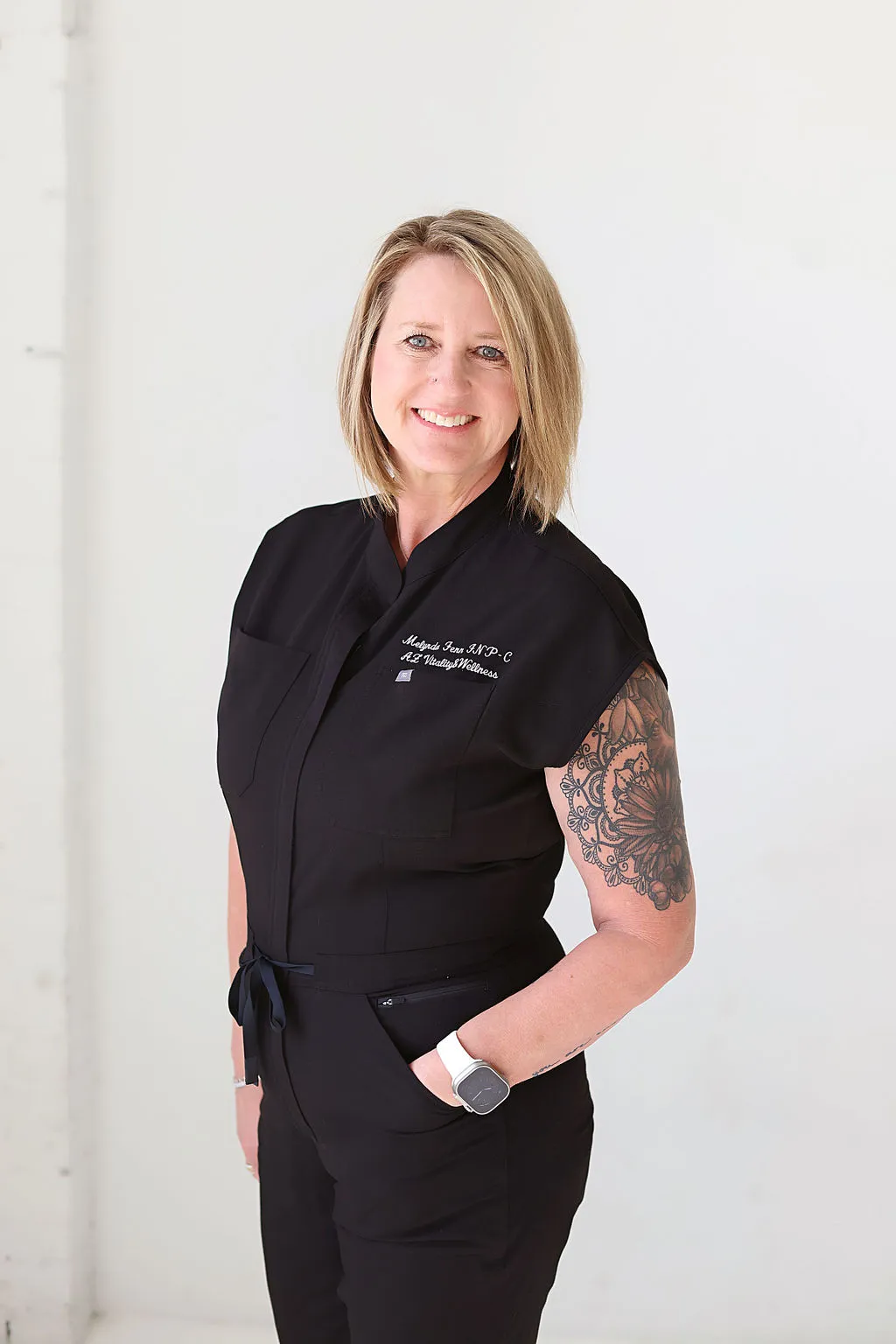
Melynda Fenn, FNP-C, founder and medical director of AZ Vitality and Wellness

Melynda Fenn

FNP-C · Founder and Medical Director

Kenra Johnson, FNP-C, nurse practitioner at AZ Vitality and Wellness

Kenra Johnson

FNP-C · Nurse Practitioner

Visit us

Hyperhidrosis Treatment Near Peoria, Glendale, Surprise and the West Valley

Our clinic is in North Peoria at 83rd Avenue and Happy Valley Road, with free parking right outside. Arrowhead is about 11 minutes away, Norterra and Vistancia about 14, Sun City West about 16 and Surprise about 21.

Your consultation takes about 40 minutes and is free. The treatment visit is booked as a 45-minute appointment, so you’re in and out over a long lunch.

Reception desk at AZ Vitality and Wellness in Peoria, where sweating consultations check in

FAQ

Excessive Sweating Treatment FAQs

At AZ Vitality and Wellness, the consultation is free and treatment for both underarms is $900. Hands, feet and other areas are priced at your consult. We don’t bill insurance, and HSA and FSA cards are welcome for eligible treatments.
Some plans cover Botox for severe underarm sweating after prescription antiperspirants have failed, usually with prior authorization through a dermatologist. We don’t bill insurance, and Xeomin is off-label for sweating, so treatment here is self-pay. HSA and FSA cards are welcome for eligible treatments.
No. Botox is the botulinum toxin FDA-approved for sweating, specifically severe underarm sweating, approved in 2004. Xeomin is FDA-approved for frown lines, forehead lines, crow’s feet and several medical conditions, and using it for sweating is off-label. Head-to-head studies have found it works about the same as Botox for underarms and palms.
It depends on where you sweat and how much. A prescription-strength antiperspirant is the usual first step. For underarm sweating that doesn’t respond, botulinum toxin injections are one of the most effective options. Iontophoresis works well for hands and feet, and miraDry or surgery last longer for underarms but come with bigger trade-offs.
It usually cuts sweating way down rather than to zero. Most people go from soaking through shirts to a normal, barely noticeable amount within about two weeks.
For underarms, usually 4 to 6 months, and often longer. In a large Botox trial for underarm sweating, half of people still had results at about six and a half months, and studies show results tend to last longer with repeat treatments. Feet usually wear off sooner, in about 3 to 6 months.
Most people notice less sweat within the first week, with the full effect at about two weeks.
Most people describe each injection as a quick pinch, and underarms are one of the more comfortable areas to treat. We use ice beforehand, and the injecting takes about 10 to 15 minutes.
Yes. Treatment only quiets the sweat glands in a small area. The rest of your skin keeps sweating normally, so your body can still cool itself, even in an Arizona summer.
Compensatory sweating, new sweating in other areas, is a well-known side effect of surgery for hyperhidrosis. It isn’t expected after injections because they treat such a small area, though a few people say they notice a little more sweat elsewhere.
Yes. Palms and soles take more medicine and are more sensitive, and some people notice a slightly weaker grip for a few weeks after hand treatment. Feet usually wear off sooner than underarms. We price these areas at your consult.
Dermatologists, primary care providers and trained nurse practitioners all treat it. At AZ Vitality and Wellness, nurse practitioners Melynda Fenn, FNP-C, and Kenra Johnson, FNP-C, do the consultation and the injections. If your sweating could be a sign of something else, we’ll send you to your primary care provider first.
Primary hyperhidrosis comes from overactive nerve signals to normal sweat glands. It often runs in families and usually starts before age 25. Secondary hyperhidrosis is caused by something else, such as a medication, a thyroid problem, diabetes, an infection or menopause, and tends to affect larger areas or happen at night.
Wait until the next morning. Skip the gym, sauna and hot tub for the rest of the day too. You can shower that night as usual.
AZ Vitality and Wellness is at 7984 W Happy Valley Rd., Suite 115, Peoria, AZ 85383, near 83rd Avenue and Happy Valley Road, with free parking. We see patients from Peoria, Glendale, Surprise, Sun City West and across the West Valley. Call or text 602-540-3547.

This page is for general education and isn’t a substitute for medical advice. Your provider will tell you whether treatment is right for you.

Stop Planning Your Day Around Sweat

Start with a free hyperhidrosis consultation. You’ll leave knowing whether it’s hyperhidrosis, what we’d recommend and what it costs, with no pressure to start that day.