Upneeq eye drops · Peoria, AZ

Upneeq Eye Drops for Droopy Eyelids in Peoria, AZ

Upneeq is a prescription eye drop that lifts a mildly droopy upper eyelid for the day. It was the first eye drop FDA-approved for acquired ptosis, an upper lid that sits low in adults. At AZ Vitality and Wellness in Peoria, a nurse practitioner checks whether your droop is the kind Upneeq treats, then shows you how to use it once a day.

Upneeq oxymetazoline 0.1% single-use eye drop vials in a pink carrying case

Upneeq comes as a strip of single-use vials. Each vial is opened for one day’s dose, then thrown away.

Upneeq at a Glance

What it is

A prescription eye drop (oxymetazoline 0.1%)

What it treats

Acquired ptosis: an upper eyelid that sits low in adults

How you use it

One drop in each affected eye, once a day

How fast

The lift peaks about 2 hours after the drop

How long

Still working at 8 hours in the clinical studies

First step

A free 40-minute consultation with a nurse practitioner

The basics

Droopy Eyelid or Heavy Skin? It Matters

Ptosis (say TOE-sis) means the upper eyelid itself sits lower than it should, so the lid edge covers more of the colored part of your eye. Acquired ptosis is the kind that shows up in adulthood. Age is the most common cause: the tendon that connects the lifting muscle to the lid slowly stretches. Years of contact lens wear, eye surgery or an injury can do it too.

Upneeq treats the lid. It doesn’t remove extra skin. If skin folds down over your lid crease and makes your eyes look hooded, the drop won’t change that, and upper eyelid surgery is the usual fix. Plenty of people have a little of both, which is why we look before we prescribe.

Not sure which one you have? That’s exactly what the consultation is for.

Signs Upneeq Might Help

Upneeq is made for a mild droop of the lid itself. These are common signs:

  • Your upper lid edge sits low and covers part of the colored ring of your eye
  • One eye looks smaller or sleepier than the other
  • You raise your eyebrows to open your eyes, especially late in the day
  • Photos make you look tired even when you’re not

Usually not what Upneeq treats

  • Extra skin hanging over the lid crease (hooding)
  • Puffiness or bags under the eyes
  • A brow that has dropped lower over the eye

How it works

How Upneeq Lifts Your Eyelid

Your upper lid has two lifting muscles. You control the big one. The small one, called Müller’s muscle, works on its own, run by the same “alert” signals that open your eyes wider when you’re startled. Upneeq’s active ingredient, oxymetazoline, switches on receptors in Müller’s muscle so it tightens and raises the lid a little.

In the two main studies, 304 adults with acquired ptosis used a drop once a day for six weeks. People using Upneeq could see more of their upper field of vision than people using a placebo drop, both on the first day and two weeks in. The average lift was about 1 millimeter: noticeable, but subtle.

Close-up of an open upper eyelid in an Upneeq product image

Product image from the manufacturer. Results vary from person to person.

First hour

The lift starts to build. Some people notice it sooner than others.

About 2 hours

The lift reaches its peak in the clinical studies.

Through 8 hours

Still there at 8 hours, the last point the studies measured.

When you stop

Your lids gradually go back to where they were. Nothing is permanent.

Sources: UPNEEQ (oxymetazoline hydrochloride ophthalmic solution) 0.1% prescribing information; average lift from manufacturer data on file. Individual results vary.

Getting started

How to Get Upneeq at AZ Vitality and Wellness

Book a free consultation

We look at your eyelids

We go over your health history

Your prescription and plan

Putting In Your Drop

  • Wash your hands and take out contact lenses
  • Twist open one single-use vial
  • Tilt your head back, gently pull down your lower lid and squeeze in one drop
  • Do the same in the other eye if both lids droop
  • Throw the vial away right after, even if some liquid is left
  • Wait 15 minutes before putting contacts back in or using another eye drop

Don’t let the tip touch your eye or anything else. Use it once a day, as prescribed.

Who it’s for

Is Upneeq Right for You?

Often a Good Fit If You Have

  • A mild droop of one or both upper eyelids
  • You want a subtle lift without surgery or downtime
  • You like the idea of a daily drop you can stop anytime
  • You’re 18 or older

Talk to Us First If You

  • Have heart disease, blood pressure that runs high or low and isn’t controlled, or get dizzy when you stand up
  • Have reduced blood flow to the heart or brain, or Sjögren’s syndrome
  • Have glaucoma, especially narrow-angle glaucoma
  • Take blood pressure or heart medicines, beta-blockers, alpha-blockers (often used for prostate symptoms) or an MAO inhibitor
  • Are pregnant, trying to get pregnant or breastfeeding
  • Use other prescription eye drops

Not Sure It’s Right for You?

Your options

Upneeq vs. Eyelid Surgery

Upneeq is one way to lift a droopy lid. Here’s how it compares with the surgical options, so you can decide what’s worth it for you.

Upneeq eye drops compared with ptosis repair surgery and upper eyelid surgery
Option What it treats How long it lasts Good to know
Upneeq eye drops A mildly low upper eyelid (acquired ptosis) One day per drop; it stops when you stop No downtime. A subtle lift, about 1 mm on average. Prescription needed.
Ptosis repair surgery A low upper eyelid, including bigger droops Usually years Done by an oculoplastic surgeon. Expect bruising and swelling for a week or two.
Upper eyelid surgery (blepharoplasty) Extra skin and fat hanging over the lid crease Usually years Doesn’t raise the lid itself. Often paired with ptosis repair when you have both.

We don’t do eyelid surgery. If surgery looks like the better fit for you, we’ll tell you at your consultation.

Cost

What Does Upneeq Cost?

We don’t post a price for Upneeq online. Your nurse practitioner will go over the cost with you at your free consultation, before you decide anything.

Start With a Free Consultation

In about 40 minutes, you’ll know whether Upneeq is right for your eyes, how to use it and what it costs. No pressure to start that day.

Safety

Side Effects and When to Get Help

Possible Side Effects

  • Eye redness
  • Dry or irritated eyes
  • Blurred vision
  • Stinging or eye pain when the drop goes in
  • Headache
  • Irritation of the eye’s surface (punctate keratitis), which your provider can check for

Upneeq belongs to a group of medicines that can affect blood pressure. If a heart or blood pressure condition gets worse while you’re using it, get medical care.

Get Medical Care Right Away If

  • An eyelid droops suddenly, or the droop comes with double vision, a severe headache, weakness, or trouble speaking or swallowing
  • You get eye pain or pressure, halos around lights, or blurred vision with nausea
  • You have chest pain, a racing heart or feel faint

A droop that appears suddenly can be a sign of a stroke or another serious problem. Call 911.

Source: UPNEEQ prescribing information, Warnings and Precautions and Adverse Reactions.

Your providers

The Nurse Practitioners Who Prescribe It

Melynda Fenn, FNP-C, and Kenra Johnson, FNP-C, are board-certified family nurse practitioners who prescribe in Arizona. They check your eyelids and your health history before prescribing Upneeq, and they’re who you call with questions afterward. You can choose who you see, and you don’t need a referral.
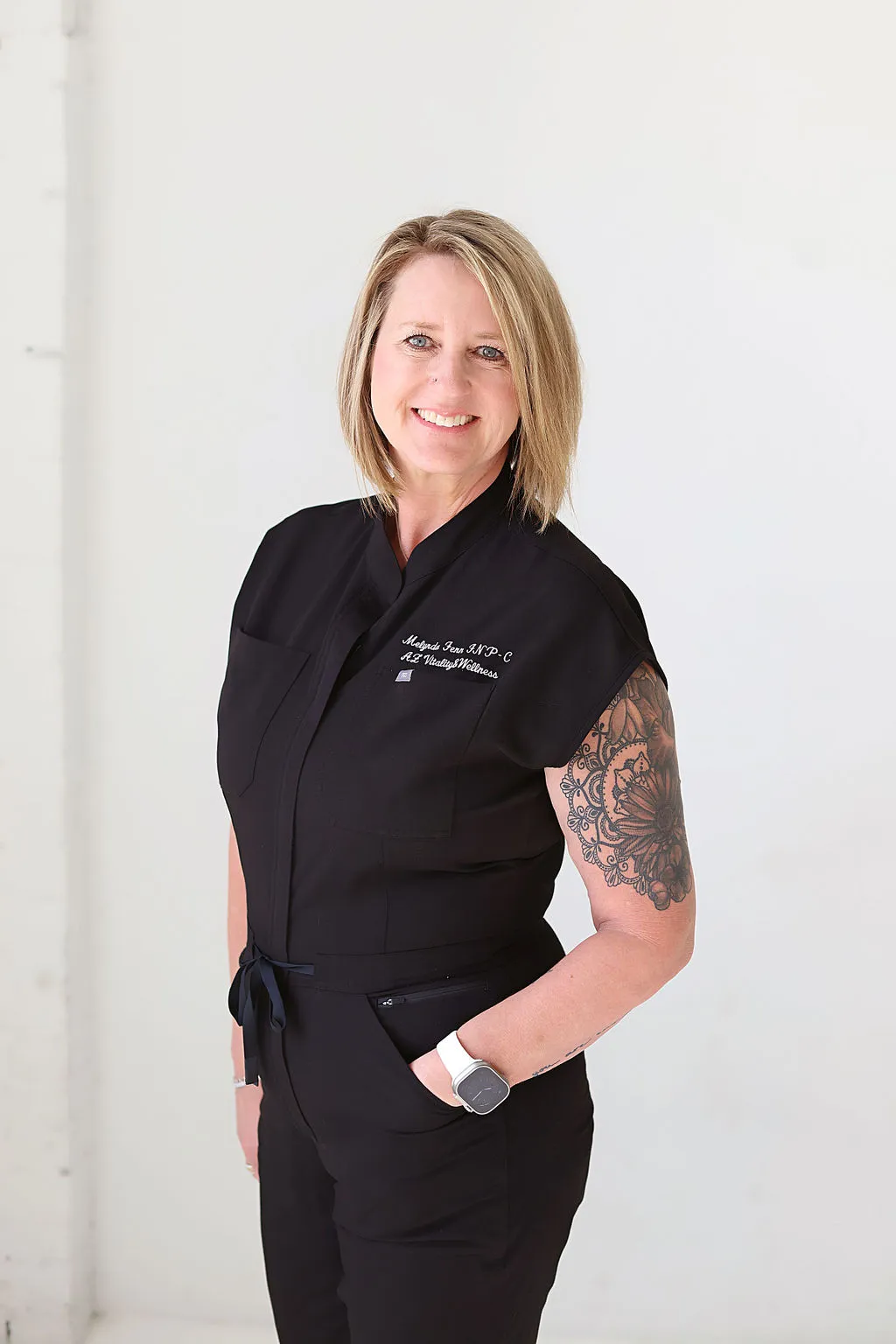
Melynda Fenn, FNP-C, founder and medical director of AZ Vitality and Wellness

Melynda Fenn

FNP-C · Founder and Medical Director

Kenra Johnson, FNP-C, nurse practitioner at AZ Vitality and Wellness

Kenra Johnson

FNP-C · Nurse Practitioner

Visit us

Upneeq Near Peoria, Glendale, Surprise and the West Valley

Our clinic is in North Peoria at 83rd Avenue and Happy Valley Road, with free parking right outside. Arrowhead is about 11 minutes away, Norterra and Vistancia about 14, Sun City West about 16 and Surprise about 21.

Your consultation takes about 40 minutes and is free, so it fits easily into a lunch break.

Reception desk at AZ Vitality and Wellness in Peoria, where Upneeq consultations check in

FAQ

Upneeq FAQs

Upneeq is a prescription eye drop (oxymetazoline hydrochloride 0.1%) that lifts a low-sitting upper eyelid. The FDA approved it in July 2020 for acquired blepharoptosis, the medical name for an upper eyelid that droops in adulthood. You use one drop in each affected eye once a day.
In the clinical studies, the lift peaked about 2 hours after the drop and was still there at 8 hours, the last time point measured. It’s a daily drop, and when you stop using it, your lids gradually go back to where they were.
The lift builds over the first couple of hours and peaks at about 2 hours. Some people notice a difference sooner.
We don’t list a price for Upneeq online. Your nurse practitioner will go over the cost at your free consultation, before you decide. We don’t bill insurance, and HSA and FSA cards are welcome for eligible treatments.
Coverage varies by plan, and many plans don’t cover it. We don’t bill insurance, so if you want to know whether your plan helps with the prescription, check with your plan directly.
Yes. Upneeq is prescription only. At AZ Vitality and Wellness, a nurse practitioner checks your eyelids and health history first, then prescribes it if it’s a good fit.
Yes. It’s made for once-daily use: one drop in each affected eye. The studies followed people using it every day for 6 to 12 weeks. Don’t use it more than once a day.
Lots of people ask this. The label is written for once-daily use, and nothing requires you to use it on days you don’t want the lift. Talk with your nurse practitioner about what makes sense for you, and never use more than one dose a day.
In the studies, the most common side effects were eye redness, dry eye, blurred vision, eye irritation, stinging when the drop goes in, headache and irritation of the eye’s surface. Each happened in 1 to 5 out of every 100 people. Upneeq can also affect blood pressure, so tell us about any heart or blood pressure conditions.
For most adults, yes. In the studies, side effects were mostly mild eye irritation or redness. Because it can affect blood pressure, it isn’t right for everyone with heart disease, uncontrolled blood pressure or narrow-angle glaucoma. That’s why we go over your health history before prescribing.
Yes. Take your lenses out before the drop and wait 15 minutes before putting them back in. Wait 15 minutes between Upneeq and any other eye drop, too.
Not usually. Upneeq lifts the eyelid itself. Hooding is extra skin folding over the lid crease, and a drop can’t remove skin. The usual fix for hooding is upper eyelid surgery. Some people have both, and Upneeq can still help the part that’s lid droop.
A drooping lid after a wrinkle relaxer is a temporary type of acquired ptosis, and it fades as the medicine wears off. Eye drops like Upneeq are one of the options providers use in the meantime. If it happens after a treatment with us, call or text us so we can see you.
AZ Vitality and Wellness is at 7984 W Happy Valley Rd., Suite 115, Peoria, AZ 85383, near 83rd Avenue and Happy Valley Road, with free parking. We see patients from Peoria, Glendale, Surprise, Sun City West and across the West Valley. Call or text 602-540-3547.

This page is for general education and isn’t a substitute for medical advice. Your provider will tell you whether treatment is right for you.

See If Upneeq Is Right for Your Eyes

Start with a free consultation. You’ll leave knowing whether Upneeq fits, how to use it and what it costs, with no pressure to start that day.