Regenerative therapy · Knees · Shoulders · Tendons · Peoria, AZ

PRP Injections in Peoria, AZ for Knee, Shoulder and Joint Pain

A knee that aches on the stairs. A shoulder that won’t let you sleep on that side. An elbow that still hurts months after it should have settled. If rest, physical therapy, and ibuprofen haven’t been enough, PRP (platelet-rich plasma) is an in-office injection made from a small sample of your own blood.

It isn’t surgery, and it doesn’t work for everyone. We’ll tell you honestly whether it’s likely to help you before you pay for an injection. It starts with a $150 regenerative consult at our Peoria clinic.

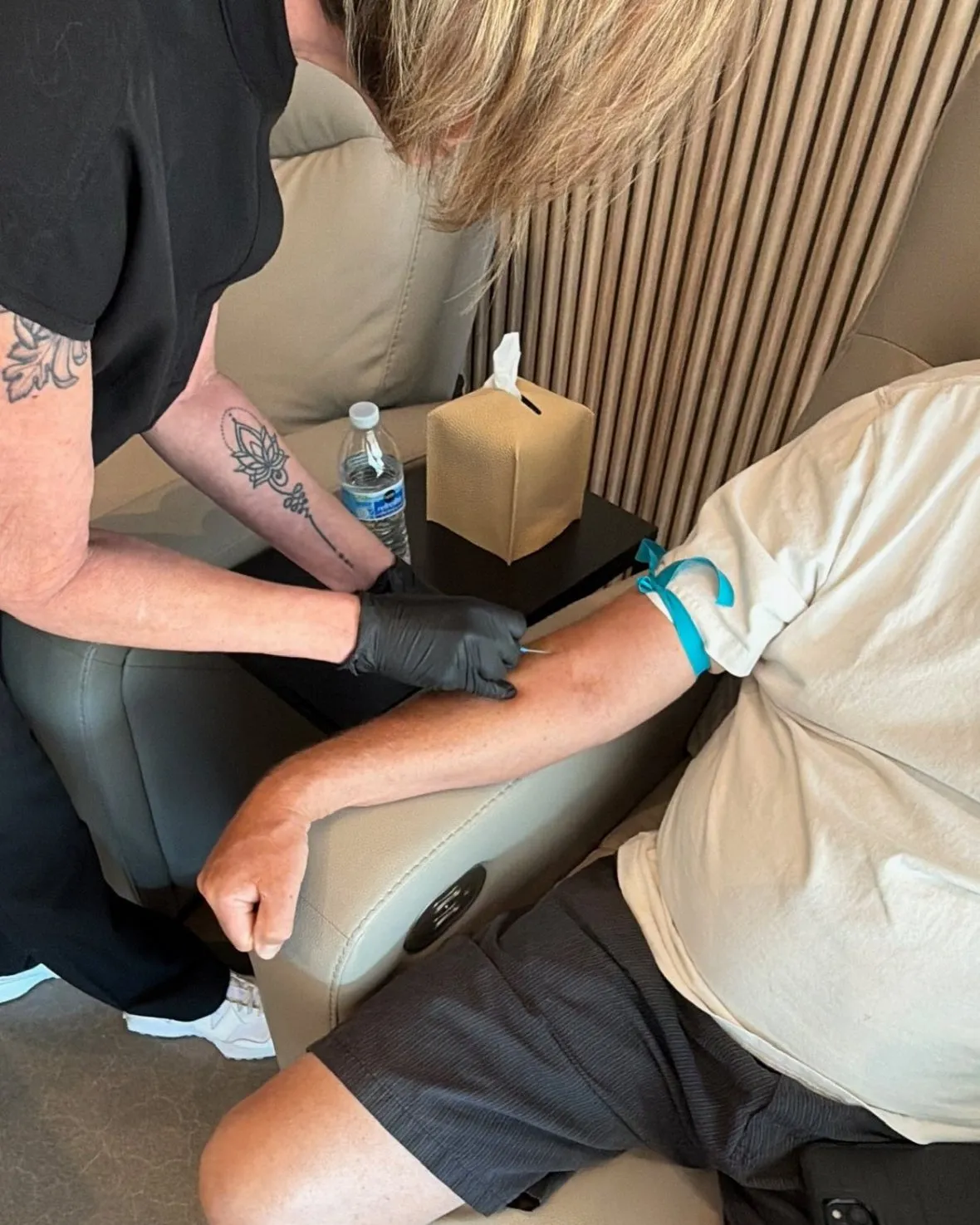
Melynda Fenn, FNP-C, drawing blood from a patient’s arm at AZ Vitality and Wellness in Peoria

PRP Injections at a Glance

What it is

An injection of concentrated platelets from your own blood

Most often for

Knee arthritis and stubborn tendon pain

Visit

About an hour, start to finish

Typical plan

1 to 3 injections, a few weeks apart

Downtime

Sore for a few days, then a gradual return to activity

Cost

Consult $150. PRP from $650.

Sound familiar?

When Joint Pain Hasn’t Gotten Better With Rest or PT

PRP is usually for pain that has hung around for months, not a fresh injury from last week. These are the problems people most often bring to their regenerative consult.

Knee Arthritis

Shoulder and Rotator Cuff Pain

Tennis or Golfer’s Elbow

Achilles and Heel Pain

Pain on the Outside of the Hip

An Old Injury That Never Settled

Get checked first, not PRP, if: the joint is suddenly hot, red and swollen, you have a fever, you can’t put weight on it, it locks or gives way, or the pain started with a fall or a pop. Those need an exam, and often an X-ray or MRI, first. If it’s severe, go to urgent care or the ER. We’ll also tell you if an orthopedic surgeon is the better next step.

The basics

What Is PRP (Platelet-Rich Plasma) Therapy?

Platelets are the tiny cells in your blood best known for clotting. They also carry growth factors, the signals your body uses to start repairing tissue. PRP is the plasma from your own blood with the platelets concentrated, usually several times higher than normal, then injected right where it hurts.

Why use it? Cartilage, tendons and ligaments have a poor blood supply, which is one reason they’re slow to mend. PRP is a way to deliver more of those repair signals to tissue that isn’t getting many on its own.

Your Own Blood, Nothing Added

PRP is made from a small blood draw, spun in a centrifuge to separate out the platelet-rich plasma. Because it comes from you, rejection isn’t a concern.

Not a Steroid Shot

A cortisone shot calms inflammation quickly. PRP works differently and more slowly, and it’s meant to support the tissue itself.

Not a New Joint

PRP won’t grow new cartilage or turn back arthritis. In a large placebo-controlled knee study, cartilage looked the same either way. The goal is less pain and easier movement.

Straight answers

Does PRP Work? What the Research Actually Says

Honestly, the research is mixed, and you deserve to hear that before you pay for an injection. Knee arthritis has the most studies, and the major medical groups don’t agree with each other.

  • American Academy of Orthopaedic Surgeons (2021): PRP “may reduce pain and improve function” in knee arthritis, based on limited evidence.
  • American Academy of Physical Medicine and Rehabilitation (2026): consider PRP for mild to moderate knee arthritis that’s still painful after conservative care, such as exercise, weight loss and physical therapy.
  • American College of Rheumatology (2019): recommends against PRP for knee and hip arthritis, partly because PRP is made so differently from clinic to clinic.
  • A 2021 trial in JAMA of 288 adults with knee arthritis found three PRP injections did no better than salt-water injections at 12 months, for pain or for cartilage.
  • Tendons: results are mixed. Some studies show less pain; others don’t beat a placebo.

The Fine Print, in Plain Words

  • PRP is prepared with an FDA-cleared device, but PRP itself isn’t an FDA-approved treatment for joint pain. Using it as a joint or tendon injection is a medical decision your provider makes with you.
  • Medicare and most insurance plans don’t cover PRP for joint or tendon pain.
  • Results vary from person to person. Nobody can promise how much relief you’ll get or how long it will last.

Sources: AAOS, Management of Osteoarthritis of the Knee (Non-Arthroplasty), 3rd ed., 2021. AAPM&R guidance statement on PRP for knee osteoarthritis, April 2026. Kolasinski SL et al. Arthritis Rheumatol 2020;72(2):220-233. Bennell KL et al. (RESTORE trial) JAMA 2021;326(20):2021-2030. FDA, Important Patient and Consumer Information About Regenerative Medicine Therapies.

Treatment day

What Happens at a PRP Injection Appointment

A Quick Review

A Small Blood Draw

Spinning Out the Platelets

The Injection

Home the Same Day

Before Your Appointment

  • Eat something and drink water beforehand, so you don’t feel lightheaded during the blood draw
  • Stop ibuprofen, naproxen, aspirin and other anti-inflammatories for about a week before, if that’s safe for you. We’ll give you exact dates.
  • Don’t stop a prescription blood thinner on your own. Tell us about it at your consult.
  • Wear clothes that make the knee, shoulder or elbow easy to reach
  • Bring any recent X-ray or MRI reports for that joint

Who it’s for

Who Is a Good Candidate for PRP Injections?

Often a Good Fit If You Have

  • Mild to moderate knee arthritis that still hurts after exercise, weight loss efforts or physical therapy
  • Tendon pain in the elbow, shoulder, Achilles, heel or hip that has lasted three months or more
  • You want to try something before considering surgery, or surgery isn’t an option for you right now
  • You’re comfortable paying out of pocket for a treatment that helps some people more than others
  • You’ll keep up with the exercises or physical therapy that go with it

Talk to Us First If You

  • Have a low platelet count, or a bleeding or platelet disorder
  • Have anemia
  • Have cancer, or are in cancer treatment
  • Have an infection anywhere in your body, or a skin problem where the needle would go
  • Take a blood thinner
  • Had a cortisone shot in the same joint in the last few weeks
  • Are pregnant
  • Have advanced, bone-on-bone arthritis, where PRP is less likely to help

Not Sure It’s Right for You?

Your options

PRP vs. Cortisone Shots vs. Gel Injections vs. Surgery

PRP is one of several options for a painful knee or tendon, and they do different jobs. Here’s the short version, based on the knee arthritis guidelines.

PRP, cortisone shots, gel (hyaluronic acid) shots and surgery compared for knee and joint pain
Question PRP Cortisone shot Gel (hyaluronic acid) shot Knee replacement or surgery
What it is Concentrated platelets from your own blood A steroid that calms inflammation in the joint A gel that adds cushion and lubrication inside the knee A surgeon repairs or replaces the joint
How fast it works Gradually, often over 2 to 6 weeks Often within a few days Gradually, over several weeks Months of recovery
What knee guidelines say Mixed. See the research above. Can give short-term relief Not recommended for routine use For advanced arthritis when other care hasn’t helped
Insurance Usually not covered Often covered Sometimes covered for knees Usually covered when needed
At our clinic Yes Ask at your consult Ask at your consult Not offered. We’ll refer you.

Cost

How Much Do PRP Injections Cost in Peoria?

We post our PRP prices so there are no surprises. You’ll get your exact plan and price at your consult, before you commit to an injection.

Our prices

Regenerative consultation, about 40 minutes$150

PRP injection, per jointfrom $650

Series of 3 PRP injections, same joint$1,800

$150 · About 40 minutes · No pressure

What Your Regenerative Consult Includes

  • Time to talk through where it hurts, how long it’s been going on and what you’ve already tried
  • A hands-on exam of the joint or tendon
  • A look at any X-ray or MRI reports you bring
  • An honest answer on whether PRP is likely to help you, or what might help more
  • Your plan, your exact price and Cherry payment options
  • No obligation to book the injection

Booking online? Choose “Regenerative Treatment Consultation.”

After your injection

PRP Recovery: What the First Few Weeks Look Like

Recovery is short, but it isn’t nothing. Here’s what most people can expect.

The First 2 to 3 Days

The First Week

Weeks 1 to 4

Weeks 2 to 6

Your Follow-Up

Call Us Right Away If

  • The joint gets hot, red or more swollen after the first few days
  • You get a fever or chills
  • The pain is getting worse instead of better
  • You notice drainage from the injection site

Call or text 602-540-3547. If it’s an emergency, call 911.

Your plan

How Many PRP Injections Will You Need, and How Long Does It Last?

How Many Injections

Some people do well with one injection. For knee arthritis, many plans use a series of 2 to 3, spaced 1 to 4 weeks apart. Your provider sets your plan.

When You Might Notice a Difference

Many people notice less pain 2 to 6 weeks after an injection, and it can keep improving for a few months. That’s slower than a cortisone shot.

How Long It Lasts

In knee arthritis studies, people who improve often report benefit for 6 to 12 months, and some for longer. In the studies that looked out to 5 years, the benefit didn’t last that long. When pain returns, some people choose another injection.

Your providers

The Nurse Practitioners Behind Your Plan

Melynda Fenn, FNP-C, and Kenra Johnson, FNP-C, are board-certified family nurse practitioners. At your consult, one of them examines your joint, decides with you whether PRP fits and oversees your plan from the first injection to your follow-up.

Melynda Fenn, FNP-C, founder and medical director of AZ Vitality and Wellness

Melynda Fenn

FNP-C · Founder and Medical Director

Kenra Johnson, FNP-C, nurse practitioner at AZ Vitality and Wellness

Kenra Johnson

FNP-C · Nurse Practitioner

Visit us

PRP Injections Near Peoria, Glendale, Sun City and the West Valley

Our clinic is in North Peoria at 83rd Avenue and Happy Valley Road, with free parking right outside. Patients come from across the West Valley. Arrowhead is about 11 minutes away, Norterra and Vistancia about 14, Sun City West about 16 and Surprise about 21.

Your regenerative consult takes about 40 minutes. No referral is needed. Plan on about an hour for an injection visit.

Reception desk at AZ Vitality and Wellness in Peoria, where regenerative consultations check in

FAQ

PRP Injection FAQs

PRP (platelet-rich plasma) therapy is an injection made from your own blood. A small blood sample is spun in a centrifuge to concentrate the platelets, which carry growth factors your body uses to start repairing tissue, and the platelet-rich plasma is injected into a painful joint or tendon. It’s most often used for knee arthritis and tendon pain that hasn’t improved with rest or physical therapy.
Regenerative therapy is the umbrella term for treatments meant to support the body’s own repair. PRP is one of them, and it’s the regenerative treatment we offer at AZ Vitality and Wellness. We don’t offer stem cell or exosome injections.
At AZ Vitality and Wellness in Peoria, a regenerative consultation is $150, a PRP injection starts at $650 per joint, and a series of 3 injections in the same joint is $1,800. You’ll get your exact plan and price at your consult, before you commit. Cherry payment plans are available for eligible patients.
Medicare and most insurance plans don’t cover PRP for joint or tendon pain, and we don’t bill insurance. You may be able to use an HSA or FSA; check with your plan first, since rules vary. Cherry payment plans let eligible patients pay over time.
It helps some people and not others. The American Academy of Orthopaedic Surgeons says PRP may reduce pain and improve function in knee arthritis, based on limited evidence, while the American College of Rheumatology recommends against it, and a 2021 placebo-controlled trial found no difference at 12 months. People with mild to moderate arthritis who haven’t improved with exercise or physical therapy are the most likely to benefit. Your provider will tell you honestly whether it’s worth trying for your knee.
They work differently. A cortisone shot calms inflammation and often helps within days, but the relief tends to be short-term. PRP works more slowly, over a few weeks, and aims to support the tissue itself; when it helps, the relief may last longer. Insurance usually covers cortisone and usually doesn’t cover PRP. Your provider can help you weigh the two for your joint.
Some people do well with one injection. For knee arthritis, many plans use a series of 2 to 3 injections spaced 1 to 4 weeks apart. Your provider sets your plan at your consult based on the joint and how you respond.
Many people start to notice less pain 2 to 6 weeks after an injection, and it can keep improving for a few months. It’s slower than a cortisone shot, and some people don’t notice a change.
In knee arthritis studies, people who improve often report benefit for 6 to 12 months, and some for longer. Results vary, and in the studies that followed people for 5 years, the benefit didn’t last that long. When pain returns, some people choose another injection.
You’ll feel the needle, then pressure or a deep ache as the PRP goes in, usually for a minute or two. Your provider can numb the skin first. The area is often sore for 2 to 3 days afterward.
Expect soreness or swelling for a few days. Keep moving gently, like walking, but skip heavy lifting, running and sports with that joint for about a week, then ease back in as your provider directs. Most people go back to everyday activities right away.
The most common are soreness, swelling, stiffness and bruising where the needle went in, which usually settle in a few days. Some people feel lightheaded during the blood draw. Infection is rare, so call us if the joint gets hot, red or more swollen, or you get a fever. Because PRP comes from your own blood, rejection isn’t a concern.
PRP isn’t right if you have a low platelet count or a bleeding or platelet disorder, anemia, cancer or current cancer treatment, or an infection, and it needs a careful plan if you take a blood thinner. It’s also less likely to help advanced, bone-on-bone arthritis. If you’re pregnant or had a cortisone shot in the same joint recently, talk with your provider first.
Usually, yes. Anti-inflammatories like ibuprofen, naproxen and aspirin can blunt how platelets work, so most people stop them for about a week before and for a while after, if that’s safe for them. Don’t stop a prescription blood thinner or a daily aspirin your physician prescribed without talking with us first. We’ll give you exact dates.
For pain on the outside of the hip from irritated tendons, PRP may be an option, and we’ll check at your consult. We don’t inject the spine or the hip joint itself. For back pain, we’ll help you find the right next step, which may be physical therapy or a spine specialist.
No. PRP is the regenerative treatment we offer. The FDA says no stem cell or other regenerative medicine product is approved for any orthopedic condition, such as arthritis or knee, back or shoulder pain, and it warns that clinics often market these products illegally. If someone offers you one outside a clinical trial, ask hard questions.
No referral is needed. You can book a regenerative consult directly online or by calling or texting 602-540-3547. If you’ve had an X-ray or MRI of the joint, bring the report. If you haven’t, your provider may suggest one before deciding.
Your consult and injection are with one of our board-certified nurse practitioners, Melynda Fenn, FNP-C, or Kenra Johnson, FNP-C. They examine your joint, decide with you whether PRP fits and oversee your follow-up.
AZ Vitality and Wellness offers PRP injections at 7984 W Happy Valley Rd., Suite 115, Peoria, AZ 85383, near 83rd Avenue and Happy Valley Road, with free parking. Patients come from Glendale, Sun City, Sun City West, Surprise and across the West Valley. Call or text 602-540-3547 or book a regenerative consult online.

This page is for general education and isn’t a substitute for medical advice. PRP isn’t right for everyone, and results vary from person to person. Your provider will recommend a plan based on your health history, exam and goals.

Find Out If PRP Is Worth It for Your Joint

Book a $150 regenerative consult, get an honest answer about your knee, shoulder or tendon, and leave with a plan and your exact price. 7984 W Happy Valley Rd., Suite 115, Peoria, AZ 85383.