Hormone health · Symptom guide
10 Signs of Hormonal Imbalance in Women and Men
Medically reviewed by Melynda Fenn, FNP-C, Founder and Medical Director · Updated October 2026
Most people who ask us about their hormones don’t start with a lab number. They start with “I just don’t feel like myself.” Here are the 10 signs we hear about most, what else can cause them, and how to find out what’s actually going on.
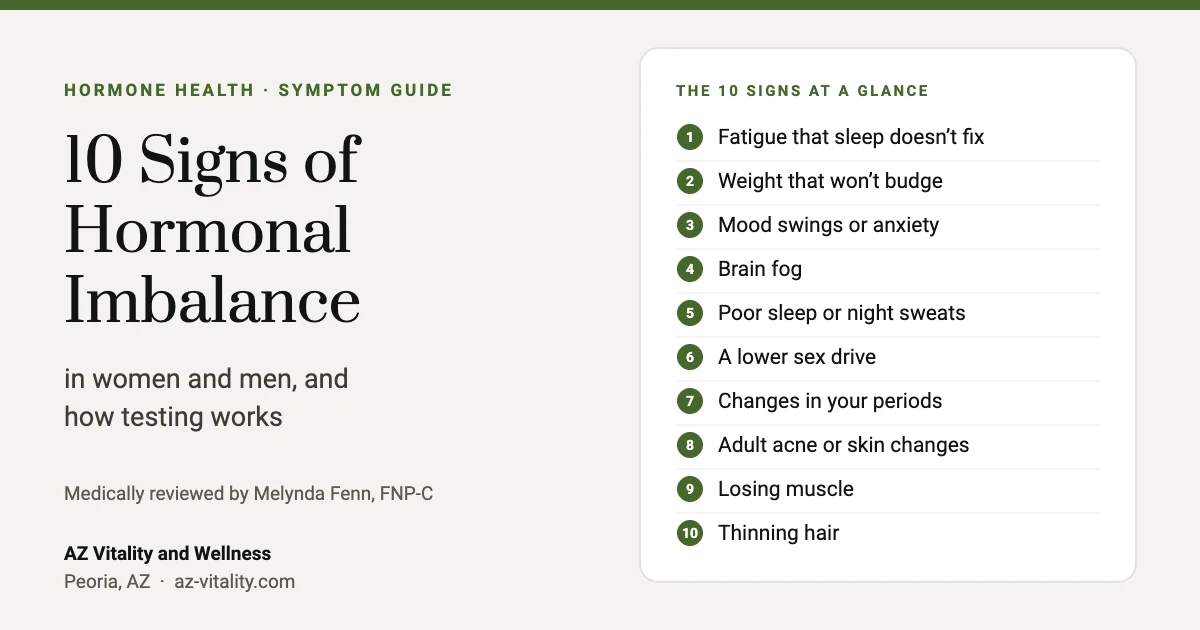
The 10 Signs at a Glance
Hormone symptoms rarely arrive one at a time, and they’re easy to write off as stress, aging or a busy season. This table pairs each sign with the hormones most often involved and the other causes worth ruling out.1, 2
| Sign | Hormones often involved | Other common causes |
|---|---|---|
| 1. Fatigue that sleep doesn’t fix | Thyroid, cortisol, testosterone, estrogen | Anemia, sleep apnea, depression |
| 2. Weight gain, or weight that won’t budge | Thyroid, insulin, cortisol, estrogen, testosterone | Medications, less activity, poor sleep |
| 3. Mood swings, anxiety or low mood | Estrogen, progesterone, thyroid, testosterone | Depression, anxiety, ongoing stress |
| 4. Brain fog | Estrogen, thyroid, testosterone | Poor sleep, stress, medications, depression |
| 5. Poor sleep, night sweats or hot flashes | Estrogen, progesterone, thyroid, cortisol | Sleep apnea, alcohol, stress |
| 6. Lower sex drive | Testosterone, estrogen | Stress, relationship strain, depression, some medications |
| 7. Irregular, heavy or missed periods | Estrogen, progesterone, thyroid, androgens (PMOS) | Pregnancy, starting or stopping birth control, stress |
| 8. Adult acne or skin changes | Androgens, estrogen, progesterone, insulin | Skin care products, some medications |
| 9. Losing muscle or slower recovery | Testosterone, thyroid, cortisol | Less activity, poor sleep, aging |
| 10. Thinning hair or new facial hair | Thyroid, androgens, estrogen | Genetics, stress, low iron |
The 10 Signs Your Hormones May Be Out of Balance
These are the signs people bring up most often at our clinic, what tends to cause them, and what else to rule out.
1. Fatigue That Sleep Doesn’t Fix
Feeling tired after a bad night is normal. Feeling drained after a full night’s sleep, week after week, is worth a closer look. An underactive thyroid is one of the most common hormone causes, and it often comes with feeling cold, dry skin and a low mood.3 Low testosterone, perimenopause and ongoing stress can all leave you running on empty too.
Fatigue also has plenty of causes that aren’t hormones, including anemia, sleep apnea and depression. That’s why it’s worth checking more than one thing at a time.
What it can look like:
2. Weight Gain, or Weight That Won’t Budge
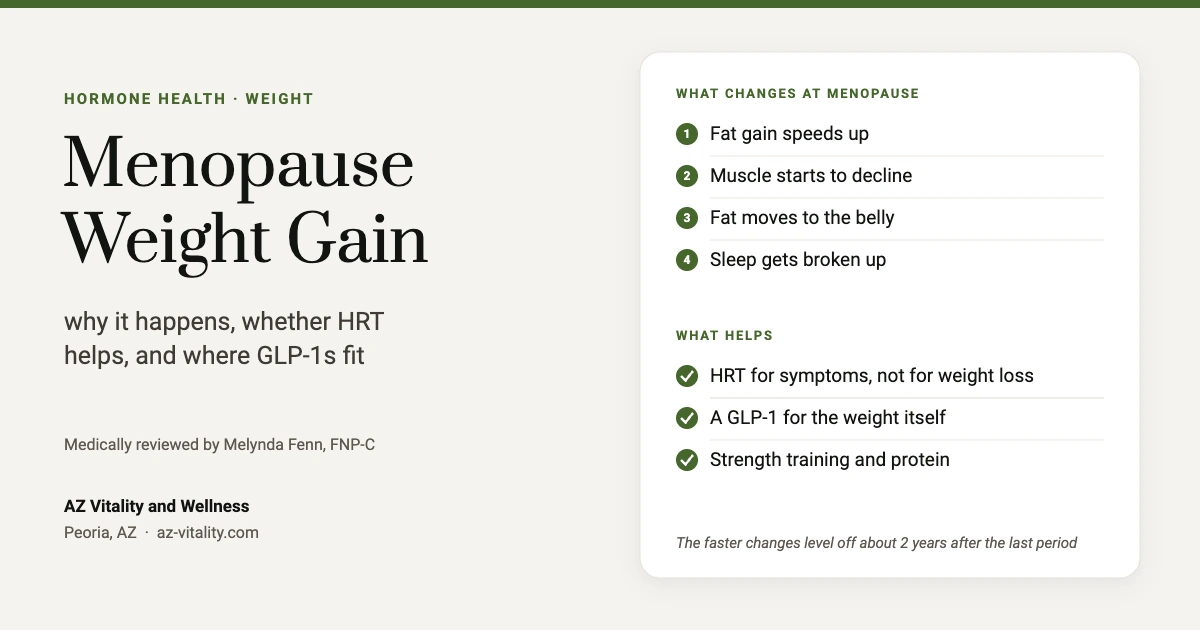
Thyroid hormone, insulin, cortisol, estrogen and testosterone all influence your appetite, where your body stores fat, and how much muscle you keep. Weight changes are especially common during perimenopause and menopause, with insulin resistance, with low testosterone, and with PMOS (formerly PCOS).2
Less common, but worth knowing: weight gain around the middle with thinner arms and legs, a rounder face and easy bruising can point to Cushing’s syndrome, which is too much cortisol. It’s most often caused by long-term use of steroid medicines.5 And losing weight while eating more than usual can be a sign of an overactive thyroid.4
If you’re eating well and staying active and the scale still won’t move, it’s worth checking hormones and metabolic markers before you blame yourself.
3. Mood Swings, Anxiety or Low Mood
Hormone shifts can show up emotionally before they show up anywhere else. Depression and anxiety are both on the list of hormonal imbalance symptoms, and an underactive thyroid can cause a low mood.1, 3 Mood changes are also common in perimenopause, and PMS can get worse.6
Hormones can be part of the story, but a low mood deserves attention in its own right. If you’ve felt down most days for two weeks or more, talk to someone about it. If you’re having thoughts of suicide, call or text 988 any time.
What it can look like:
4. Brain Fog and Trouble Concentrating
Losing your train of thought, rereading the same email, forgetting why you walked into a room. Many people describe brain fog when their hormones are shifting, including during perimenopause and with low thyroid or low testosterone.
Poor sleep is one of the biggest drivers of brain fog, and night sweats can break up your sleep without you realizing it. Stress, some medications and depression play a role too, so brain fog is a reason to look at the whole picture.
5. Poor Sleep, Night Sweats or Hot Flashes
Hot flashes and night sweats are classic signs of perimenopause and menopause, and sleep problems often come with them.6 An overactive thyroid can also cause sweating, trouble tolerating heat and trouble sleeping.4
Many patients describe feeling “wired but tired”: exhausted all day, then unable to switch off at night. Ongoing stress affects cortisol, which can disrupt sleep, increase cravings and make it harder to recover.
What it can look like:
6. A Lower Sex Drive
A reduced interest in sex is a recognized sign of hormone changes in both women and men.1 In women it often comes with vaginal dryness or painful sex, especially around menopause. In men it often comes with fewer morning erections, fatigue and losing muscle, which can point to low testosterone.
Stress, relationship strain, depression and some medications, including some antidepressants, lower desire too, so the conversation matters as much as the labs.
7. Irregular, Heavy or Missed Periods
Your cycle is one of the clearest windows into your hormones. Periods that come closer together or further apart, get heavier or lighter, or skip months can be a sign of perimenopause, a thyroid problem or PMOS.2, 3, 6
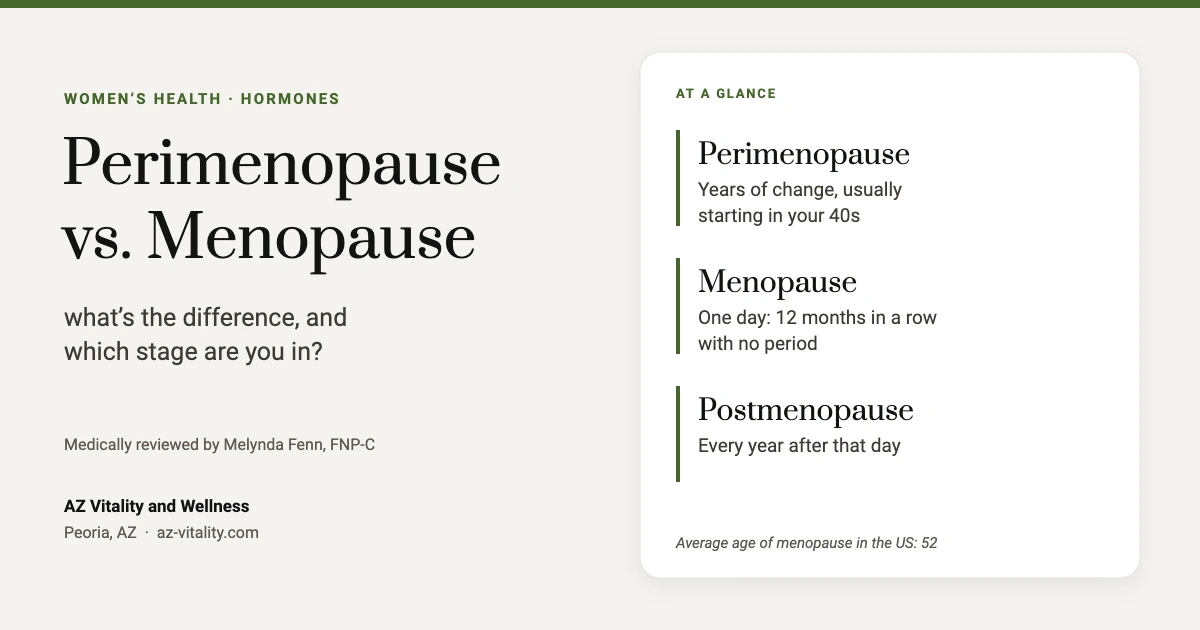
Perimenopause usually starts in your mid-40s, though it can begin in your mid-30s, and it lasts about four years on average. Menopause is reached after 12 months in a row without a period.6 More in our perimenopause vs. menopause guide.
PMOS (polyendocrine metabolic ovarian syndrome) is the new name for PCOS, adopted in 2026 because the condition affects hormones and metabolism, not just the ovaries. Irregular cycles, extra facial or body hair, acne and thinning hair are common signs.8 Why PCOS is now PMOS.
8. Adult Acne and Skin Changes
Breakouts don’t always end with your teens. Women get adult acne more often than men, and it tends to flare with hormone shifts: around periods, during pregnancy, in perimenopause and menopause, and after starting or stopping birth control.7
Other skin changes can point to hormones too. Darkened skin on the back of the neck or in the armpits, new skin tags, and very dry or coarse skin are all on the list of hormone-related changes.1
9. Losing Muscle or Slower Recovery
If your workouts feel harder and your results have stalled, hormones may be part of it. Losing muscle is a recognized sign of low testosterone in men, and muscle weakness can come with thyroid problems and with too much cortisol.1, 4, 5
The tell is effort versus result. If you’re training the same way and getting less from it, it’s worth checking. For men, see the 7 signs of low testosterone.
10. Thinning Hair or New Facial Hair
Hormones affect hair in both directions. Thinning hair can go with an underactive thyroid, and coarse hair on the chin or face can point to higher androgen (male hormone) levels, which is common with PMOS.2, 8
Men who lose body hair or notice they shave less often may have low testosterone.1 Genetics, stress and low iron can also cause hair loss, so it’s worth checking more than hormones.
Signs of Hormonal Imbalance in Women vs. Men
Most of the 10 signs show up in anyone. These are the ones Cleveland Clinic lists as specific to sex hormones:1
Can Men’s Hormones Be Out of Balance?
Yes. Testosterone naturally declines with age, and stress, poor sleep and extra weight can push it lower. Men often notice low energy, a lower sex drive, changes in erections, losing muscle, gaining body fat or irritability. Low testosterone is a common cause, but it isn’t the only one. Thyroid function, blood sugar, sleep and stress can all produce the same symptoms. See the 7 signs of low testosterone in men.
Can Women Have Low Testosterone?
Yes. Women make testosterone too, and lower levels are most often linked with low sexual desire. The evidence supports testosterone treatment for one situation: women after menopause whose low desire bothers them. There isn’t good evidence for using it for energy, mood or weight.10
What Causes a Hormonal Imbalance?
Often it’s more than one thing at once. These are the most common causes:
How Do You Know If Your Hormones Are Out of Balance?
Testing starts with a conversation, not a blood draw. Your provider reviews your symptoms, health history, medications, cycles, sleep and stress, then orders the labs that match. There’s no single test that checks every hormone.2
Are At-Home Hormone Tests Worth It?
Home kits can measure some hormones, but they can’t check everything, and results depend on timing. Think of them as a starting point, then go over the results with a provider who can order the right follow-up tests.2
How Do You Fix a Hormonal Imbalance?
There’s no single fix. The right approach depends on what’s driving your symptoms, and sometimes the answer isn’t hormones at all. These are the main paths:
Is Hormone Therapy Safe Now?
The guidance on menopause hormone therapy has changed. In February 2026 the FDA approved new labels for the first group of products, removing heart disease, breast cancer and dementia statements from the boxed warning. The FDA pointed to studies showing that women who start within 10 years of menopause, generally before age 60, had lower overall mortality and fewer fractures.11 It still isn’t right for everyone, and anyone on hormone therapy should be followed by a provider.
Can You Balance Your Hormones Naturally?
Daily habits can’t fix every hormone problem, but they matter more than most people expect. Sleep, regular activity, a healthy weight and managing stress all help, especially with insulin resistance.9 Be cautious with supplements sold to “balance hormones.” Talk to your provider before you start one, especially if you take other medicines.2
Hormone Testing and Treatment in Peoria
If several of these signs sound familiar, you’re not imagining it, and you don’t have to keep guessing. Our board-certified nurse practitioners take the time to hear your whole story, draw labs right here in our clinic when testing will actually help, and walk you through what your results mean.
1. Talk it through
Your provider asks about your symptoms, health history, cycles, sleep, stress, energy, mood and goals, plus any labs or treatments you’ve already tried.
2. Test if it will help
If lab work is needed, we draw it on-site during your appointment.
3. Review your results together
Your provider explains what your labs show and how they fit with how you feel.
4. Build your plan
That may include hormone therapy, thyroid or metabolic follow-up, lifestyle changes, weight support, or other services when appropriate.
5. Follow up and adjust
Hormones need careful follow-up, so we check in on how you’re feeling and adjust as your body responds.
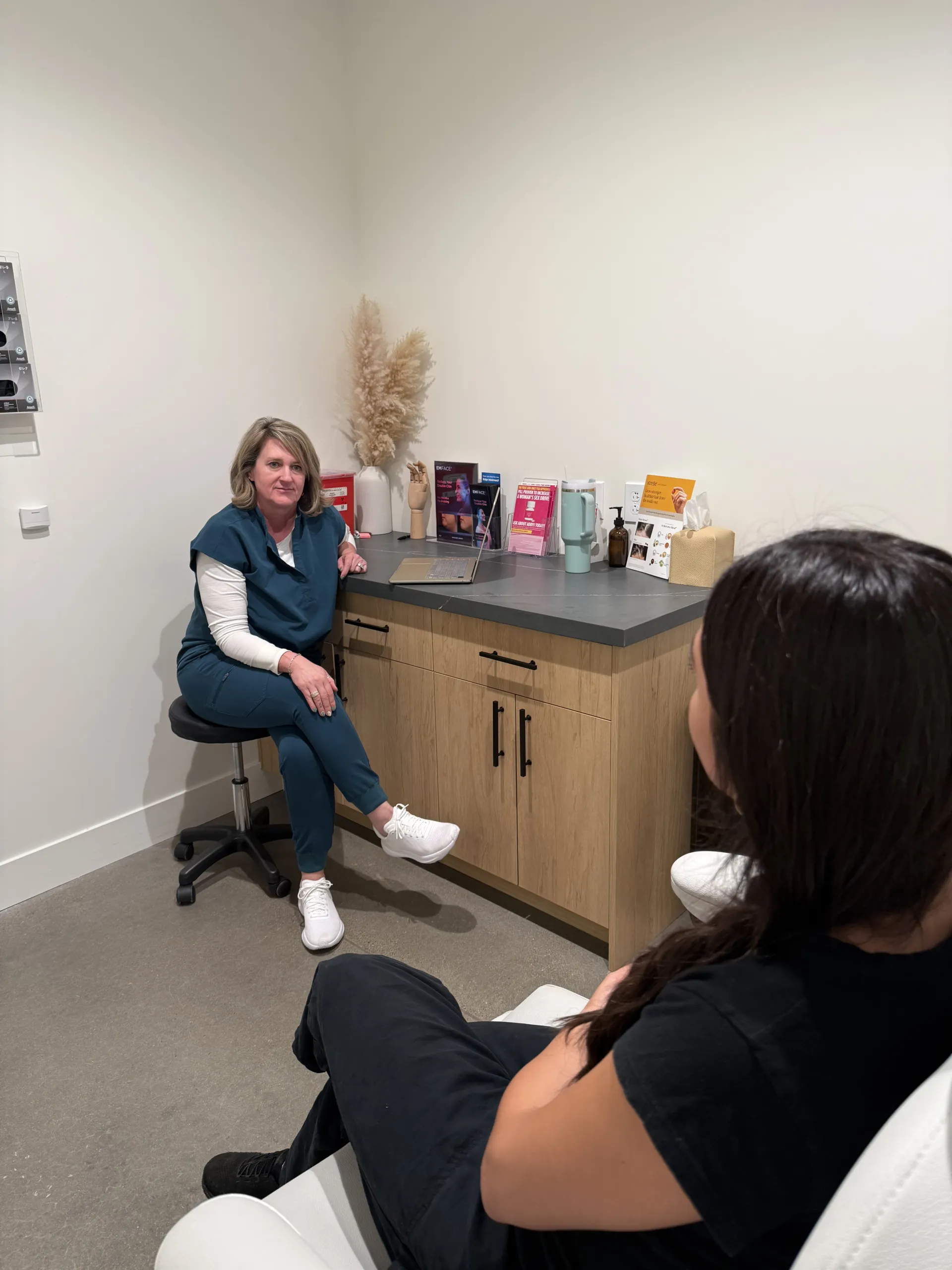
Your first visit starts with a conversation about how you’ve been feeling.
Hormonal Imbalance FAQs
Sources
- Cleveland Clinic. Hormonal imbalance: causes, symptoms and treatment
- UCLA Health. 7 signs of a hormonal imbalance, and what to do about it, July 3, 2024
- National Institute of Diabetes and Digestive and Kidney Diseases (NIDDK). Hypothyroidism (underactive thyroid)
- NIDDK. Hyperthyroidism (overactive thyroid)
- NIDDK. Cushing’s syndrome
- Cleveland Clinic. Perimenopause: age, stages, signs and symptoms
- American Academy of Dermatology. Adult acne
- Polyendocrine metabolic ovarian syndrome, the new name for polycystic ovary syndrome: a multistep global consensus process. The Lancet, May 2026
- NIDDK. Insulin resistance and prediabetes
- Davis SR et al. Global consensus position statement on the use of testosterone therapy for women. J Clin Endocrinol Metab 2019;104(10):4660-4666
- U.S. Food and Drug Administration. FDA approves labeling changes to menopausal hormone therapy products, February 12, 2026
What changed in this update (October 2026): we rebuilt this guide around the 10 signs with a quick-reference table, added the differences between women and men, causes, how testing works, at-home tests, the 2026 PMOS name change and the February 2026 FDA hormone therapy labeling update, with links to every source.
Medical disclaimer: This article is for educational purposes only and is not a substitute for professional medical advice, diagnosis, or treatment. Always consult a qualified healthcare provider with questions about your health.